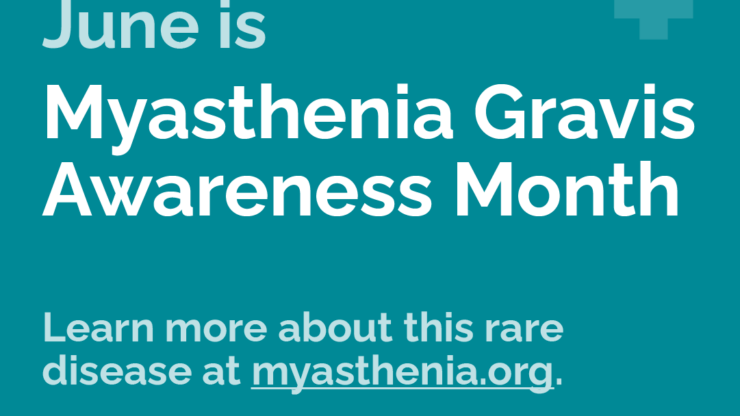
I posted about this earlier this week on social media. June, in addition to Pride, is Myasthenia Gravis (MG) Awareness Month. I’ll get to what MG is in a moment, but let’s get a confession out of the way first: I have myasthenia gravis. I was diagnosed a little over four years ago, though I exhibited symptoms as far back as six years ago.
Allow me to share some information I am paraphrasing from the MG Foundation of America.
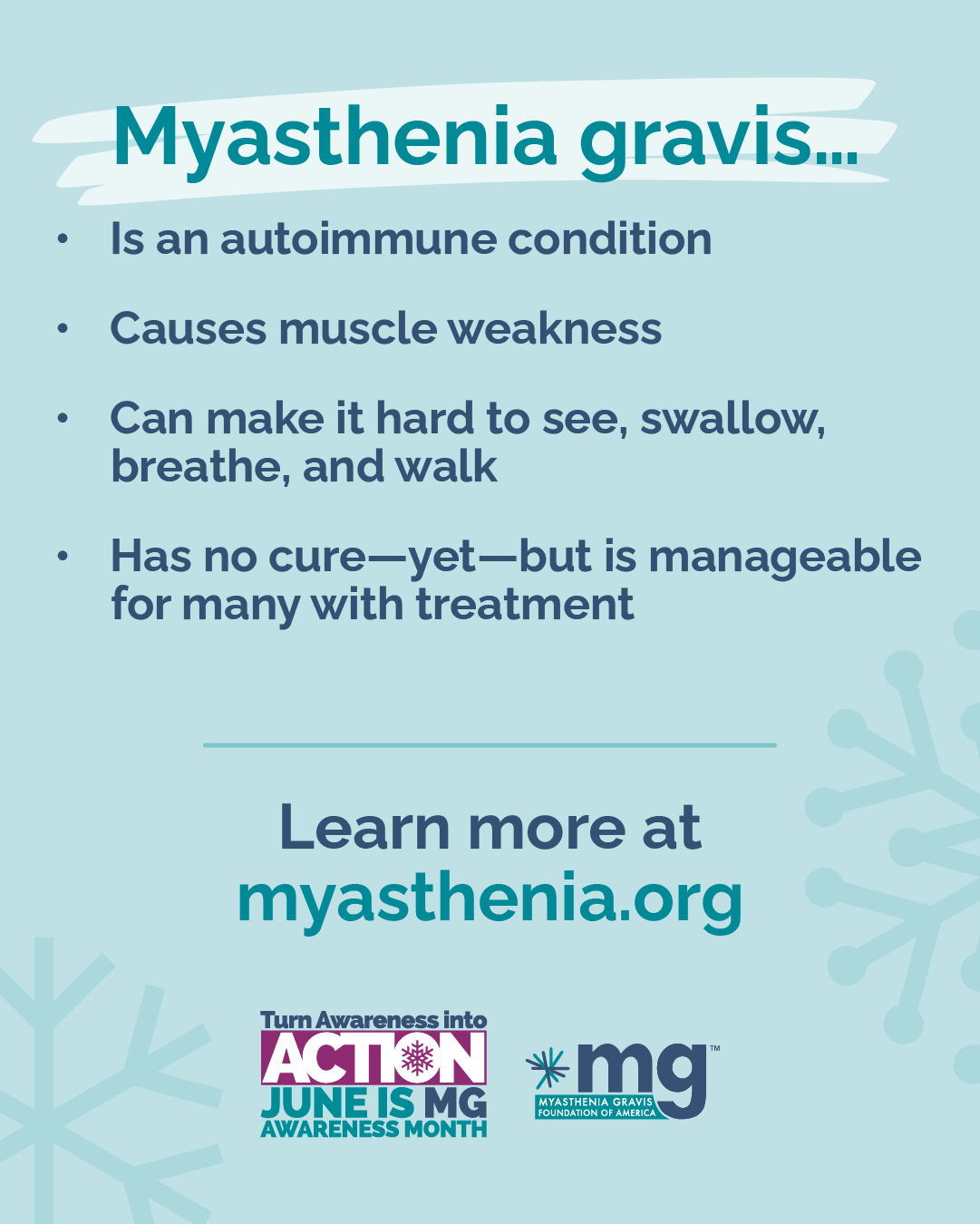
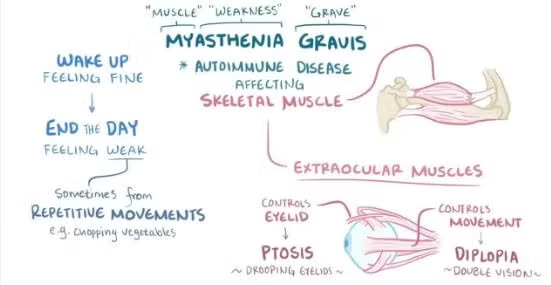
What is it? MG is a rare neuromuscular, autoimmune disorder that causes extreme fatigue and profound muscle weakness. Impulses from the brain travel down nerves but are blocked by antibodies before they reach the muscle. The body is essentially attacking itself and stopping normal muscle function.
You might be wondering what this has to do with role-playing games. Bear with me; I’ll get to it. I’ve decided to talk about this publicly to raise awareness and add my two cents to the conversation about the disorder, but let’s get back to the explanations for a second.
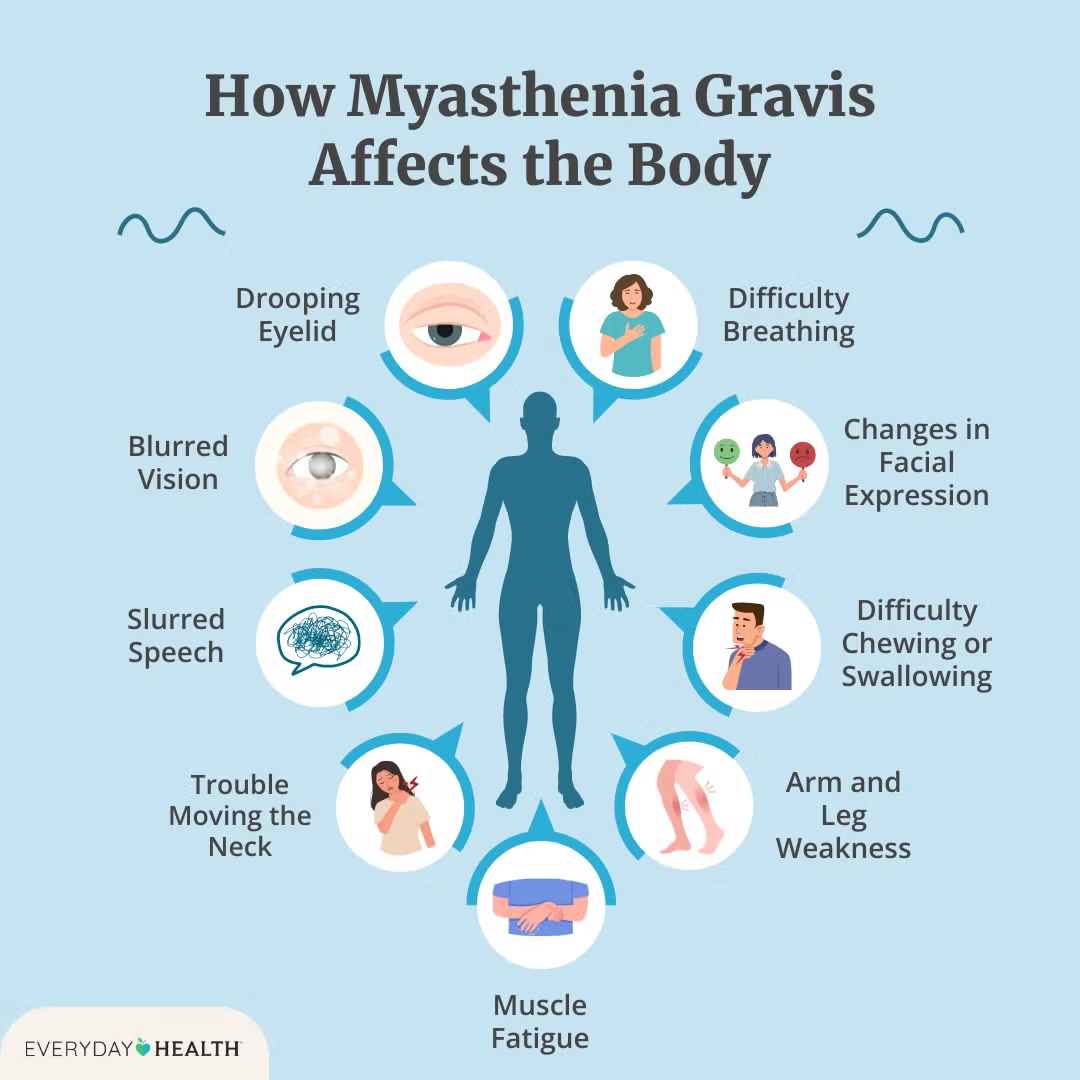
First documented by a physician in Oxford, England, in 1672, MG can impact a person’s ability to see, swallow, smile, walk, breathe, or engage in everyday activities. Everyone’s disease presents a little differently—that’s why myasthenia is known as a “snowflake disease.” (I AM a snowflake, I knew it! Unique and special, I mean.)
For me, the worst symptoms were losing my voice, slurring my words, and simply not being able to speak properly. Those of you who know me in real life saw me a couple of years ago when I was significantly weaker, experiencing serious difficulty speaking and swallowing.
To my family and friends, this is no secret. Many acquaintances know as well. If we’ve run into each other over the last four years, I’ve probably talked about this face-to-face, and I have always tried to share information about MG with people I meet. Still, I’ve been reluctant to discuss it or publish anything on social media for fear of being vulnerable. One often worries about how others will react, how revelations like this might affect employment opportunities, or how people will treat you. But in the spirit of the month and all it celebrates, I’ve decided to share my diagnosis and how I’ve dealt with it.
So, how is myasthenia gravis treated, and what is the prognosis? There is currently no cure, but there are treatments to manage the symptoms. For most individuals, myasthenia gravis is a manageable chronic condition. The outlook for most people with MG is positive, as current treatment options are often highly effective. While existing treatments do not cure the disease, most patients experience improved muscle strength, and some even achieve remission.
What else should you know about Myasthenia Gravis?
I have been incredibly fortunate to have great doctors who identified the right medications and treatments. Having the insurance to access these treatments has greatly reduced my symptoms and made them manageable. I am in better physical shape now than I was four years ago, and I hope to continue to manage my condition effectively.
But this was not the case four years ago. MG is hard to diagnose, and some people spend years without proper answers. I was experiencing symptoms for two full years before I was correctly diagnosed, and by then, I was having trouble speaking and swallowing. It was incredibly taxing and frustrating for me as someone whose voice is a vital tool for my line of work. It was scary. It affected my ability to communicate properly with loved ones. It also impacted my favorite hobby: tabletop role-playing games.
What does a Game Master do when he cannot speak?
With all the other complications in life, not being able to play a game may seem like the least of my concerns. But as I’ve said often, gaming is part of my mental health routine. It is a creative endeavor I enjoy outside my other responsibilities. It is something that connects me with my dear friends. We are part of each other’s support group, and the time we spend together is something we value and treasure.
Having to consider giving that up was just another source of stress during an already difficult time.
The reality was that I needed to rest; speaking for hours often left me exhausted. At the same time, I did not want to give this up. I wanted to cling to this vestige of normalcy in the midst of chaos.
This wasn’t easy for my players. My voice was hoarse, broken, and sometimes slurred. I would speak with great difficulty. Often, I would use text-to-speech software when I could not speak properly. Some people would not put up with this, but my players are first and foremost my friends—guys like Carlos, Fernan, both Josés (Bellavista and Garcia), Lao, and Oscar—they knew how important our weekly gatherings were. They knew how much it meant to me, and they kept showing up. They supported me despite the limitations, and we played on.
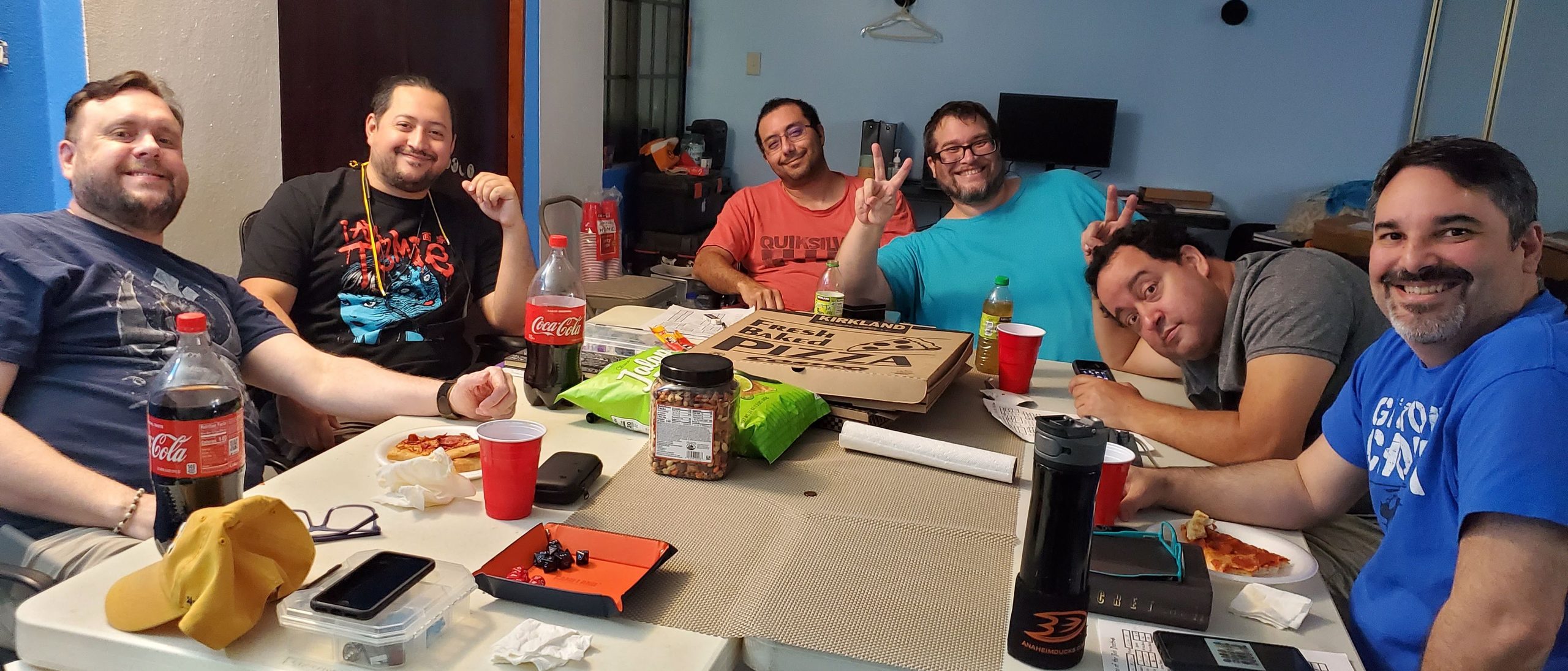
That meant the world to me. It helped me deal with my sadness and my frustration. Their love was a vital part of the support my friends and family showed me during those difficult times.
I am doing much better right now. The medications I take help me manage the symptoms. I know the signs, rest regularly, listen to my body’s cycles, and manage my condition. I hope that this improvement continues in the long term. I am incredibly grateful for the love and support everyone around me shows me every single day. Gaming has truly given me a circle of friends who are like family—a gift that continually enriches my life.
Now, I hope to use the spaces I have online to share my story, build knowledge about myasthenia gravis, return the kindness shown to me, and, hopefully, raise awareness of this relatively rare condition. Knowledge is power! Hopefully, further research will find a cure for MG.
While I’ve gotten to know other MG patients, I have not met other gamers with MG. I wonder whether there are more of us in gaming spaces and whether we can organize to support each other and the larger MG community. If you are a patient, even if you do not wish to share your diagnosis publicly, please feel free to contact me.
If you want to learn more, here are some useful links:
What is MG: https://myasthenia.org/understanding-mg/what-is-myasthenia-gravis/
The Myasthenia Gravis Foundation of America: https://myasthenia.org/
Donate to the Myasthenia Gravis Foundation of America: https://myasthenia.givevirtuous.org/donate/donation-form
Global Genes: https://globalgenes.org/disorder/myasthenia-gravis/
European Myasthenia Gravis Association: https://eumga.eu/
Thank you for reading!
Some of the images I used in this post are from the Myasthenia Gravis Foundation of America website, and this post: Back to Doing What I Love: My Myasthenia Gravis Story By Kathalina Nguyen: which you can read here: https://myasthenia.org/blog/2024/08/08/back-to-doing-what-i-love-my-myasthenia-gravis-story/

Thanks a lot for sharing your story here!
Thnak you for encouraging me to do so, for always being there, and your support. You are an amazing friend.
Thank you so much for your words. I wish you strength, patience, and peace. This was a disease I didn’t know about but now I do.
And it does sound terrifying not just for work but life itself. Not being able to speak with loved ones and saying how much you care. Or having difficulty with it.
I am so glad that you’re doing better! And I hope that it keeps being manageable and improves!
Thnak you very much! I appreciate your kindness. I am so glad I can share my experiences and create awareness. Big hug to you!