Let me introduce the post and give you some context.
For months now, I’ve been sharing TTRPG recommendations on Saturdays, with links to books, crowdfunding projects, and affiliated links, over at my Sunglar’s Musings page. While I share the link across my social media channels, the recommendation lives on Facebook, and many friends and acquaintances don’t use the platform. While FB remains popular in Puerto Rico, I feel like I am limiting the reach of my recommendations by primarily posting them there. So, from now on, I am moving this and a few other topics I’ve been sharing there to the blog, where they can reach a wider audience and are easier to access across platforms. Now on with the post!
For today’s Recommendation Saturday, we are talking about pulp adventure.
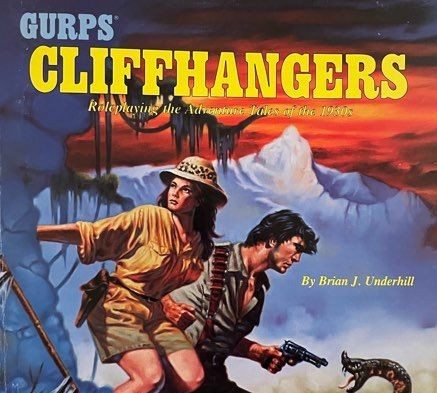
If you follow me across social media, you may have noticed I’ve been heavily invested in the 1920s and 1930s lately while developing my Gilded Shadows pulp-superhero campaign. When I prep for a specific genre, I tend to look at current and older TTRPG books for reference and ideas. That brings me to today’s pick: GURPS Cliffhangers.
Now, I know what some of you are probably thinking. “GURPS? I don’t run GURPS.”
Let me share a poorly kept secret among veteran Game Masters. You don’t need to play GURPS to get your money’s worth out of their supplements. The historical and genre books published by Steve Jackson Games, particularly during the 90s and early 2000s, double as some of the best system-neutral reference guides in the TTRPG hobby.
GURPS Cliffhangers is a perfect example. The book is essentially a toolkit for running action-packed campaigns set between the 1920s and 1930s. It breaks down the era’s core tropes: lost worlds, mad scientists, masked vigilantes, and globe-trotting archaeologists. All without getting bogged down in mechanics.
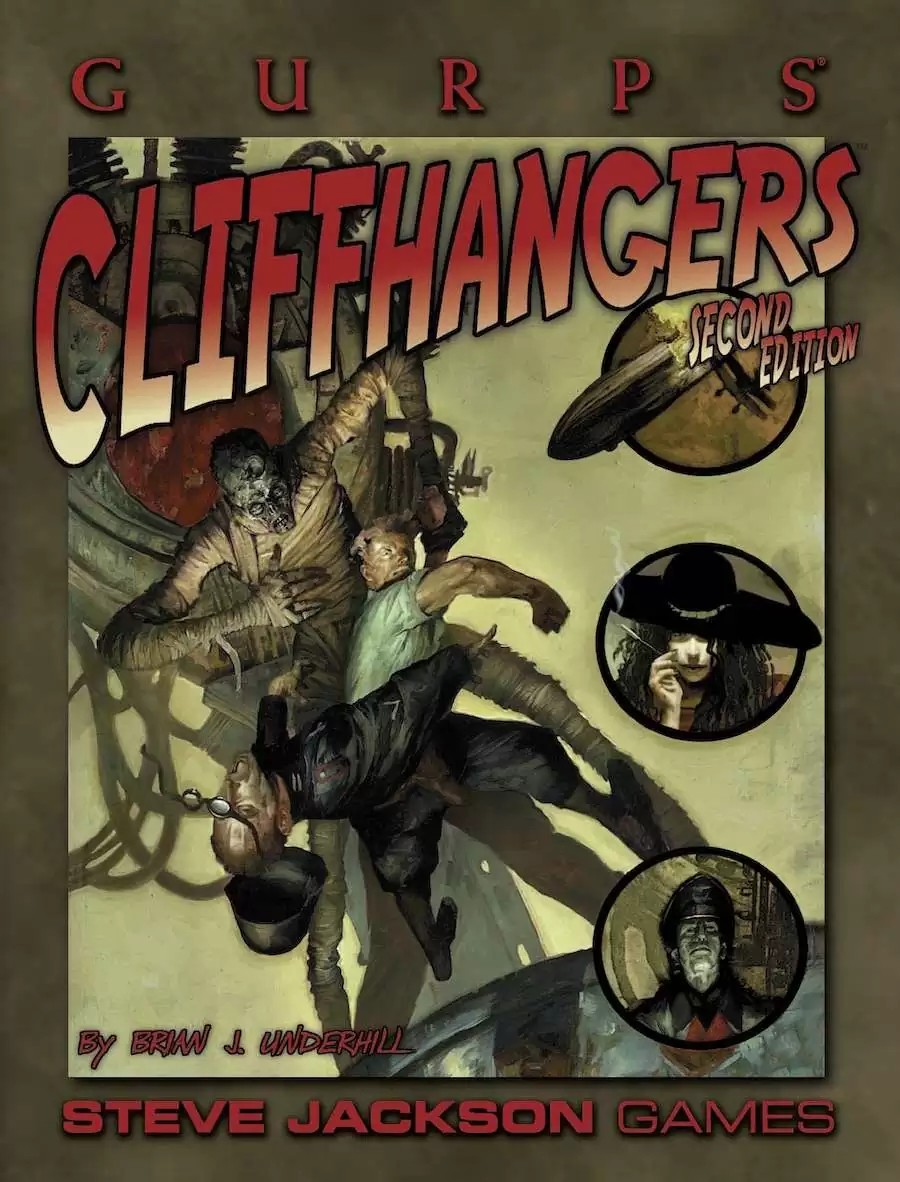
Written by Brian J. Underhill, the Second Edition of GURPS Cliffhangers (published in 2002) is essentially a GM toolkit for running action-packed campaigns modeled after 1930s adventure serials. It covers the era from the mid-1920s up to the beginning of World War II.
What makes this book so useful isn’t the mechanics. It’s the highly digestible historical detail. As you read, you get a crash course in the period, including a comprehensive timeline spanning 1925 to 1939. It breaks down the actual logistics of running a globe-trotting game, detailing the travel times of tramp steamers, zeppelins, and clipper flying boats. It even covers the era’s technology, haggling etiquette, and standard rates for bribing local officials in foreign ports.
The book dedicates most of its pages to adventure locales across the globe. You get practical information and adventure seeds for locations ranging from the Seattle Underground and the Tacoma Narrows Bridge to the ruins of the Inca and Maya, the dense jungles of the Congo, and the shifting borders of the Spanish Civil War.
It also offers excellent advice on structuring different campaign styles, whether you want to run weird menace, espionage, horror, or straight exploration. It gives you the narrative tools to build proper mastermind villains, femme fatales, and elaborate hideouts, and even touches on integrating secret societies into your pulp campaign.
As a GM, I can use this book as a foundation for my upcoming game. It gives me a great overview of the world. If I need a quick adventure hook, a villain’s motivation, or want to understand how an expedition into uncharted territory would work, it has it. The GURPS rules and stat blocks only make up a fraction of the page count. The rest is pure, usable lore and worldbuilding that you can lift and drop directly into whatever system you prefer.
If you are planning to run Savage Worlds, like me, or any game featuring fedoras, Tommy guns, and ancient ruins, pick this up. It will save you hours reading through Wikipedia articles and help you nail the tone of the genre right out of the gate.
Click on the following link to get GURPS Cliffhanger via my DriveThruRPG affiliate link.