I began playing D&D during the heyday of the artists known as the “Four Horsemen” of TSR—Elmore, Easley, Caldwell, and Parkinson—which I discussed in my previous post on the artists who inspired my TTRPG gaming.
However, I switched from BECMI D&D over to AD&D around the winter of 1987, if memory serves. I remember it vividly because during one of those very first sessions, I was running the game as the Dungeon Master while listening to the American Top 40 end-of-year countdown. But I had actually been buying and reading the AD&D 1st Edition books for a few months before we ever rolled dice.
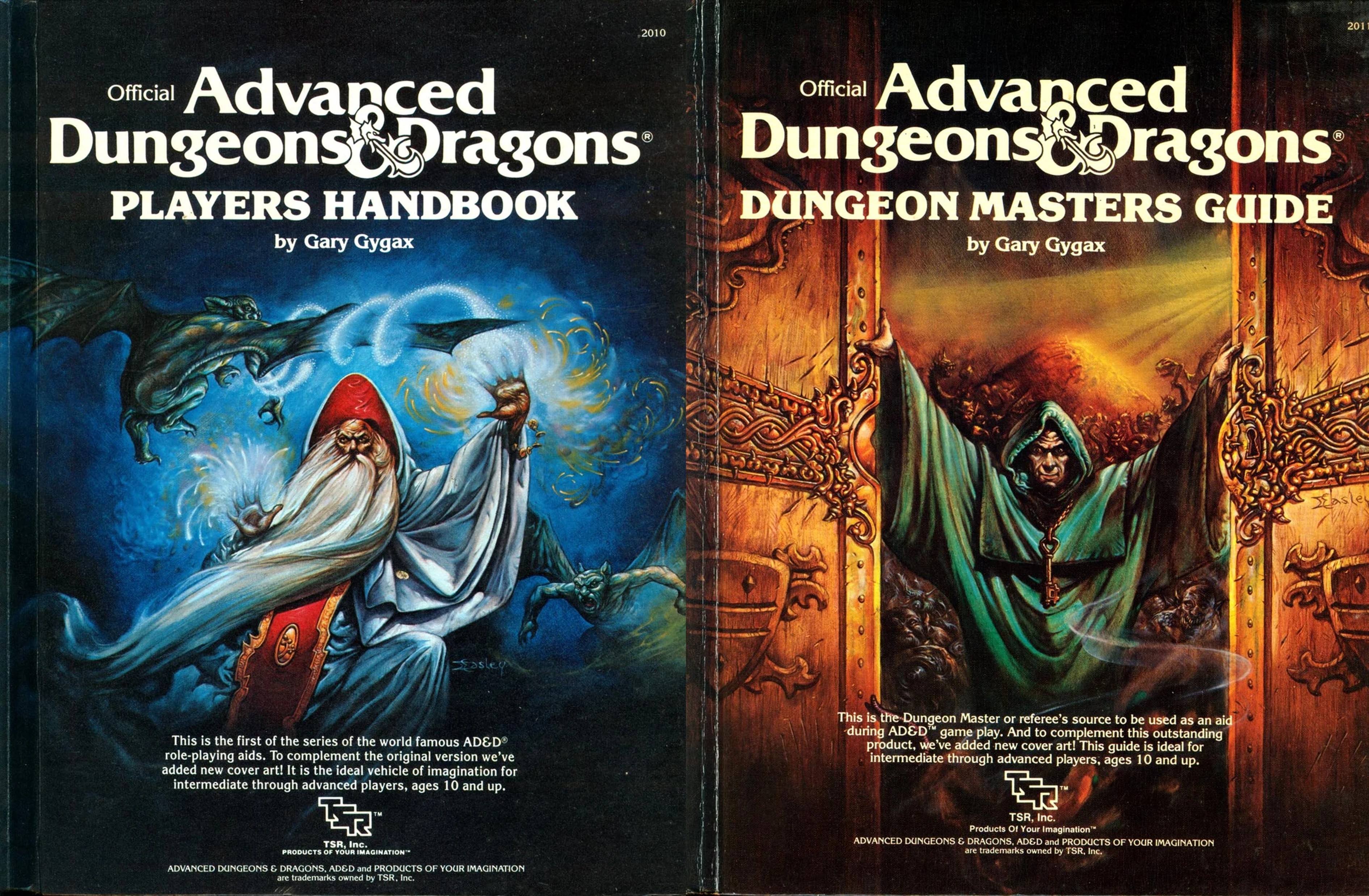
My original AD&D 1e books were the orange-spine printings featuring the iconic covers by Jeff Easley. I got the Dungeon Masters Guide (DMG) first, followed by the Players Handbook (PHB). The only two AD&D books I owned that were not orange-spine editions were the original Monster Manual (MM) and a copy of Deities & Demigods (the rare printing that still included the Cthulhu and Melnibonéan Mythos!), which I scored from a neighbor’s garage sale. You can read the full story about that lucky find right here.
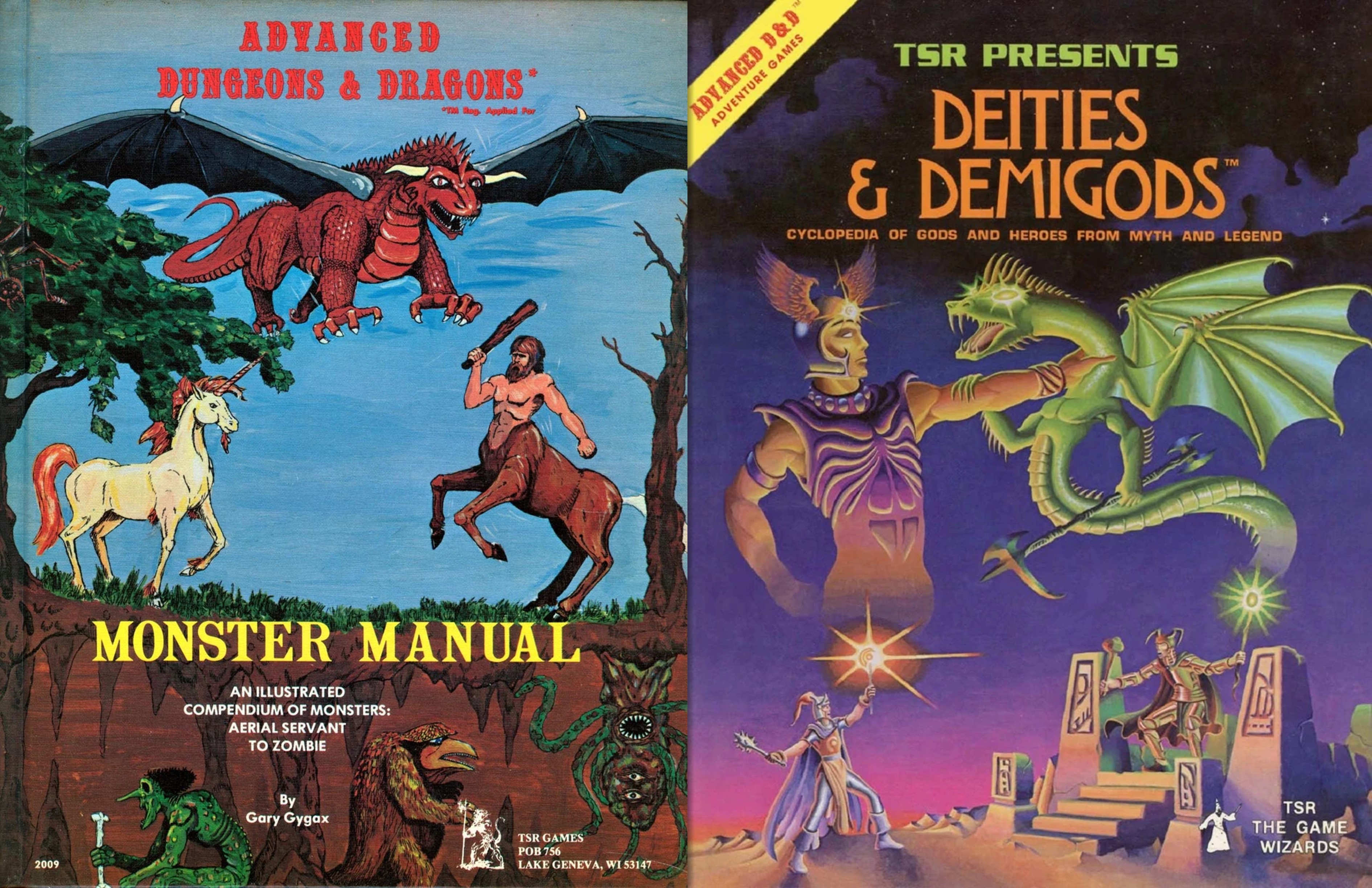
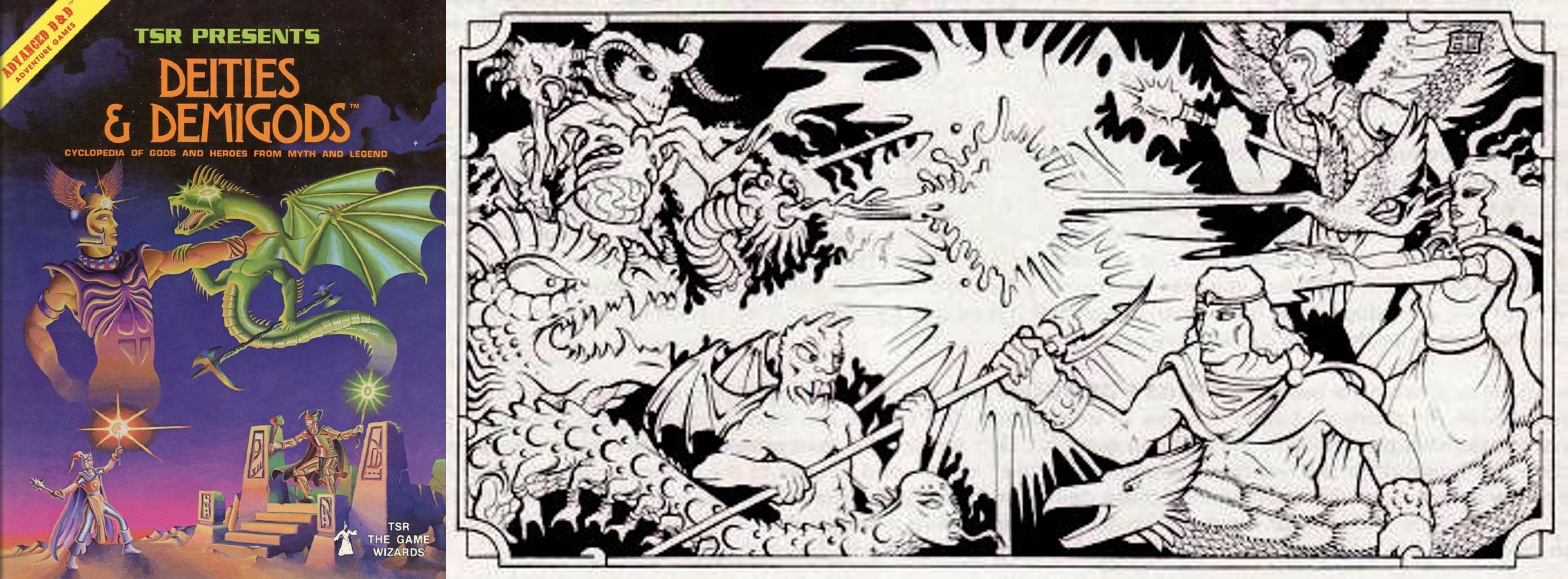
The covers for Deities & Demigods by Erol Otus and the Monster Manual by David A. Trampier served as my true introduction to TSR’s earlier art style. But, despite my books sporting the newer Easley covers on the outside, the interiors still featured the original 1e layout and illustrations. And I must admit… at first, I was turned off by them.
Let me explain before you burn me at the stake!
I came into the hobby through the Mentzer Red Box and the rest of the BECMI sets. While they weren’t anywhere near as cleanly laid out as modern games, they had a very approachable, easy-to-use style. They were specifically designed to welcome you in and teach you the game.
When you dive into the 1e PHB—and especially the DMG—they are not easily approachable books. I know now that their design came directly from the layout style of miniature wargaming rulebooks, but to young me, they just felt like inscrutable, textbook-like mystery tomes.
To add to my confusion, I started reading the books in the opposite order to their publication! Starting with the DMG didn’t make much sense if you hadn’t read the PHB first. I eventually figured it out and switched books, but coming directly from the polished look of BECMI, I was a little disappointed by the interior art.
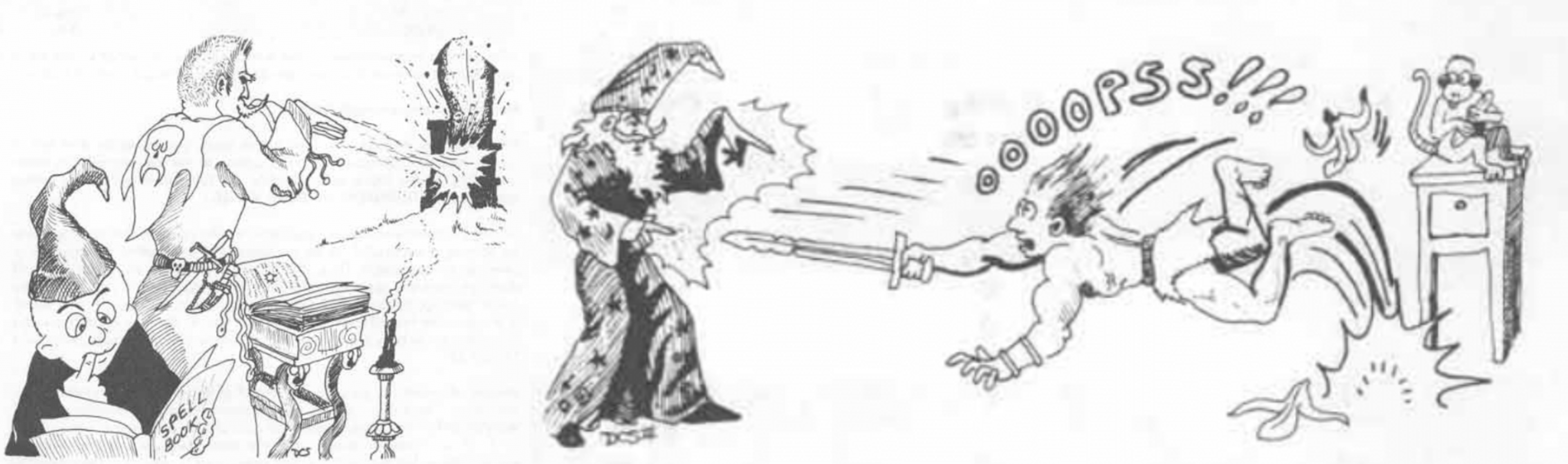
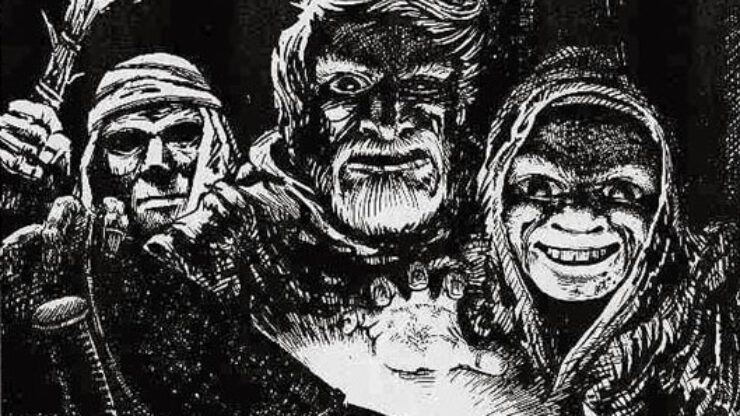
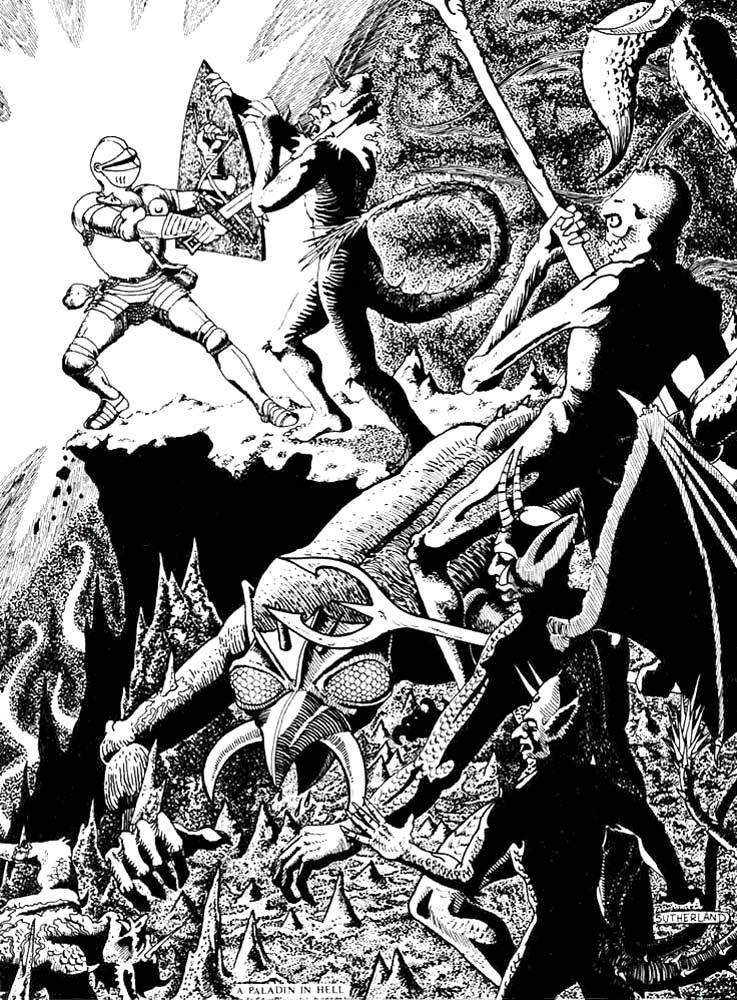
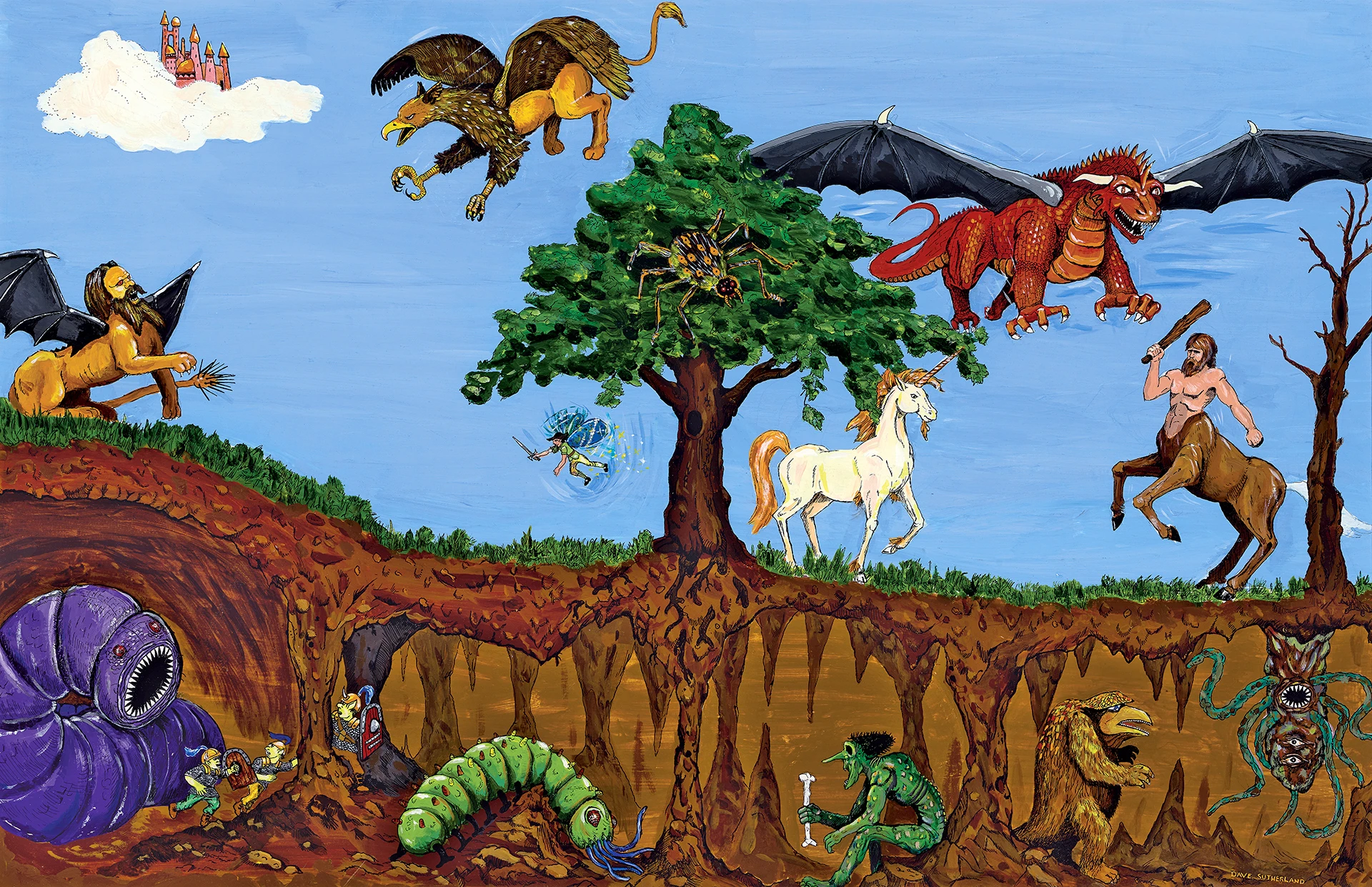
The cartoonish illustrations next to the Intelligence and Dexterity tables in the PHB were okay, but they didn’t quite match my epic expectations for the game. I’ve also never been a huge fan of the “races” lineup on page 18 by David Sutherland. But then I flipped a few pages and saw his A Paladin in Hell full-page piece… and I was absolutely blown away!
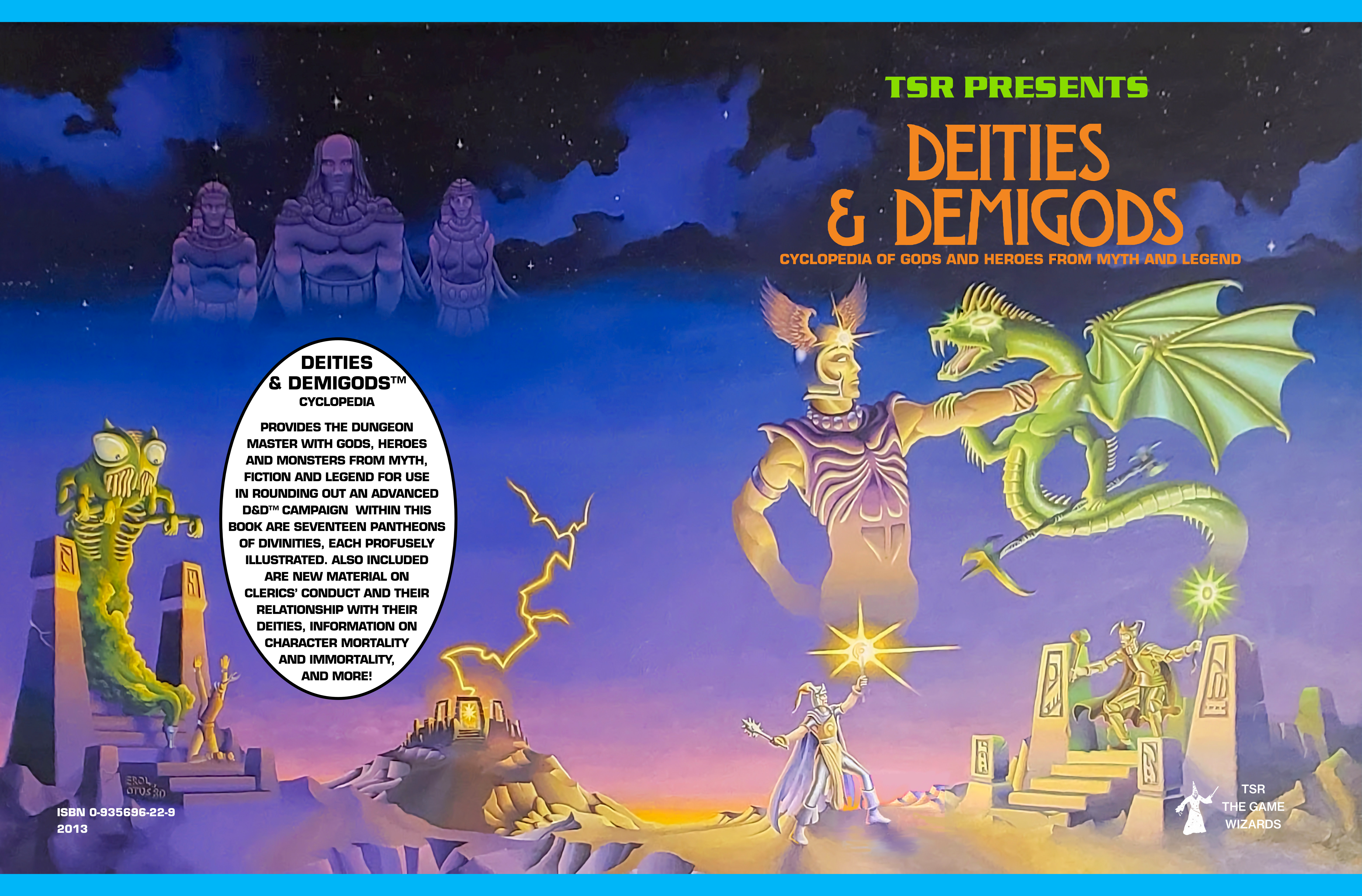
The MM had more illustrations that captured my imagination. But it was truly through the original Deities & Demigods that I learned to appreciate the old-school, foundational art of early TSR deeply. So, let me talk about these luminaries—Jeff Dee, Erol Otus, David C. Sutherland, David A. Trampier, and Jim Roslof—the artists who were there at the birth of the hobby, and how their work inspired me!
Jeff Dee
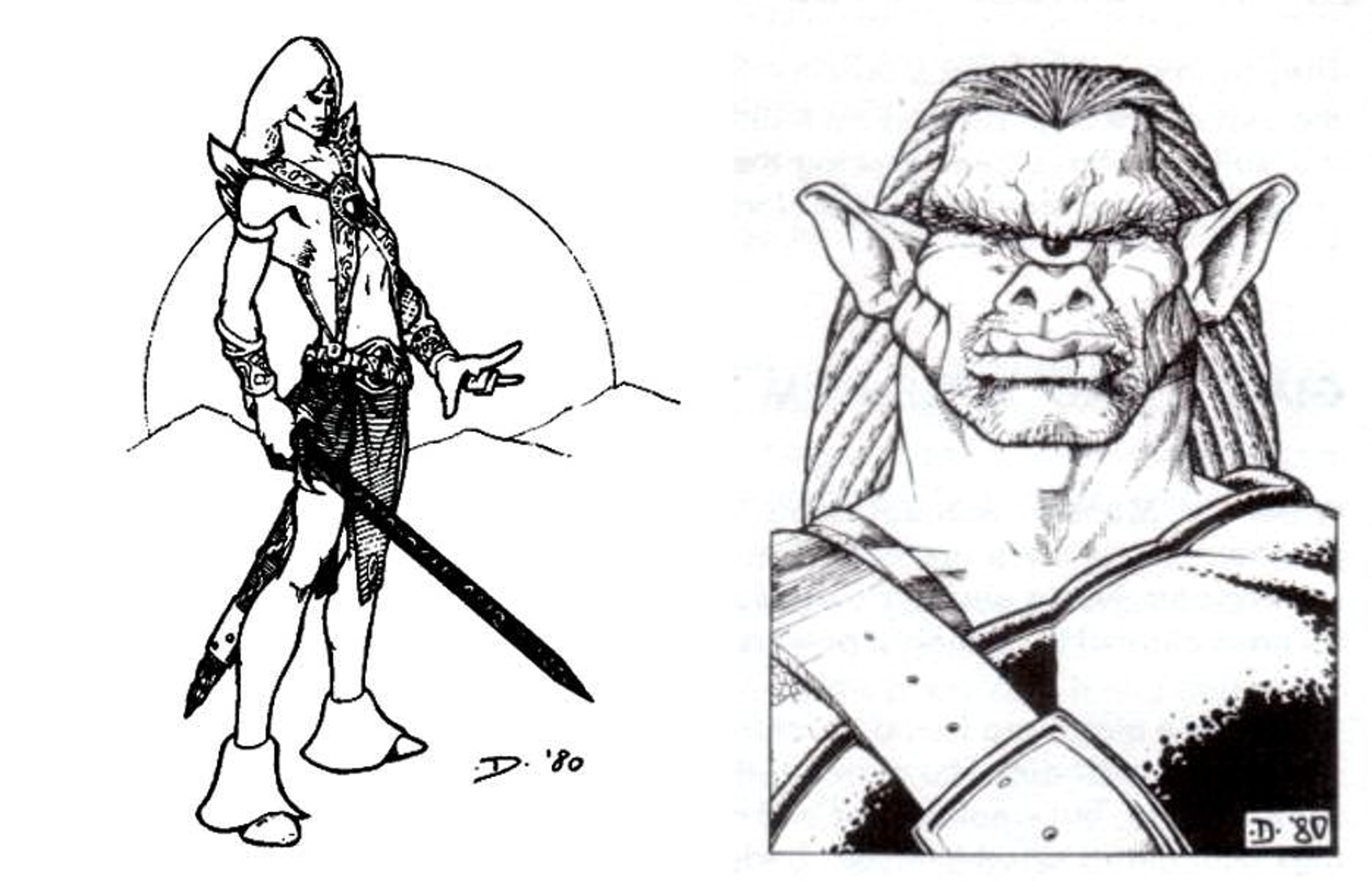
Of all the artists who originally worked for TSR, Jeff Dee is my absolute favorite. He has a distinct, clean style with clear comic-book influences. He didn’t just work on D&D; he also illustrated Villains & Vigilantes and The Mighty Protectors. I was actually lucky enough to interview him here on the blog back in 2015.
I must admit that of all the original TSR artists, his was the only name I knew by heart for a long time. As my interest in the hobby grew, I learned about the other legends and their trajectories, but Dee’s name always stuck with me. Strangely enough, I had no idea what he actually looked like. So, when I started watching episodes of The Atheist Experience and heard his name, I thought, “Huh, this guy has the same name as the fantasy artist.” Little did I know they were the same person!
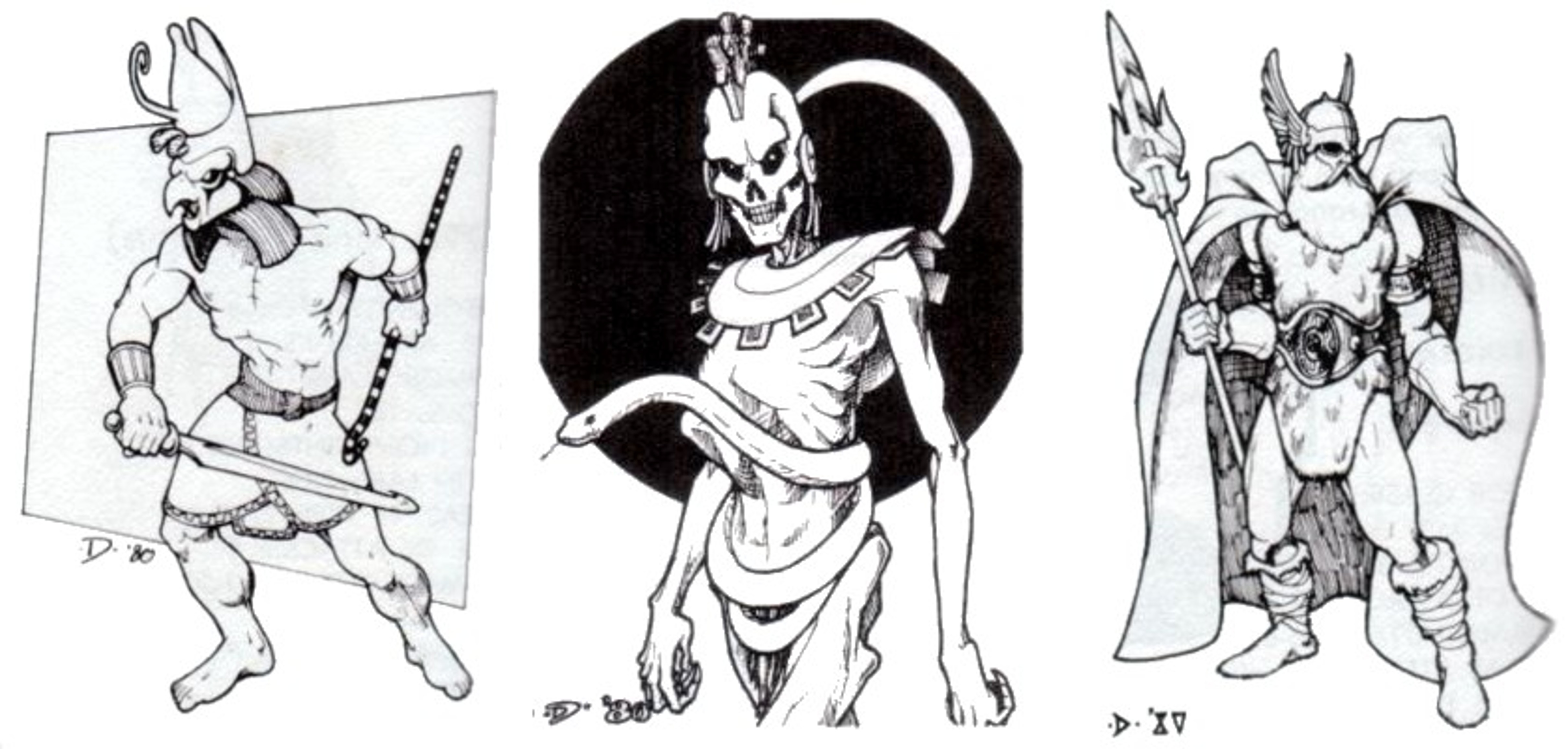
His work on the Norse, Egyptian, Melnibonéan, and Non-Human Mythos sections of Deities and Demigods blew me away. That book was my first introduction to Elric of Melniboné, and Dee’s illustration of Gruumsh is still exactly how I imagine the orc god today. Jeff worked on a lot of classic modules that I read but never actually played, and because of his distinctive line work, even as a teenager, I could immediately tell when he had drawn something.
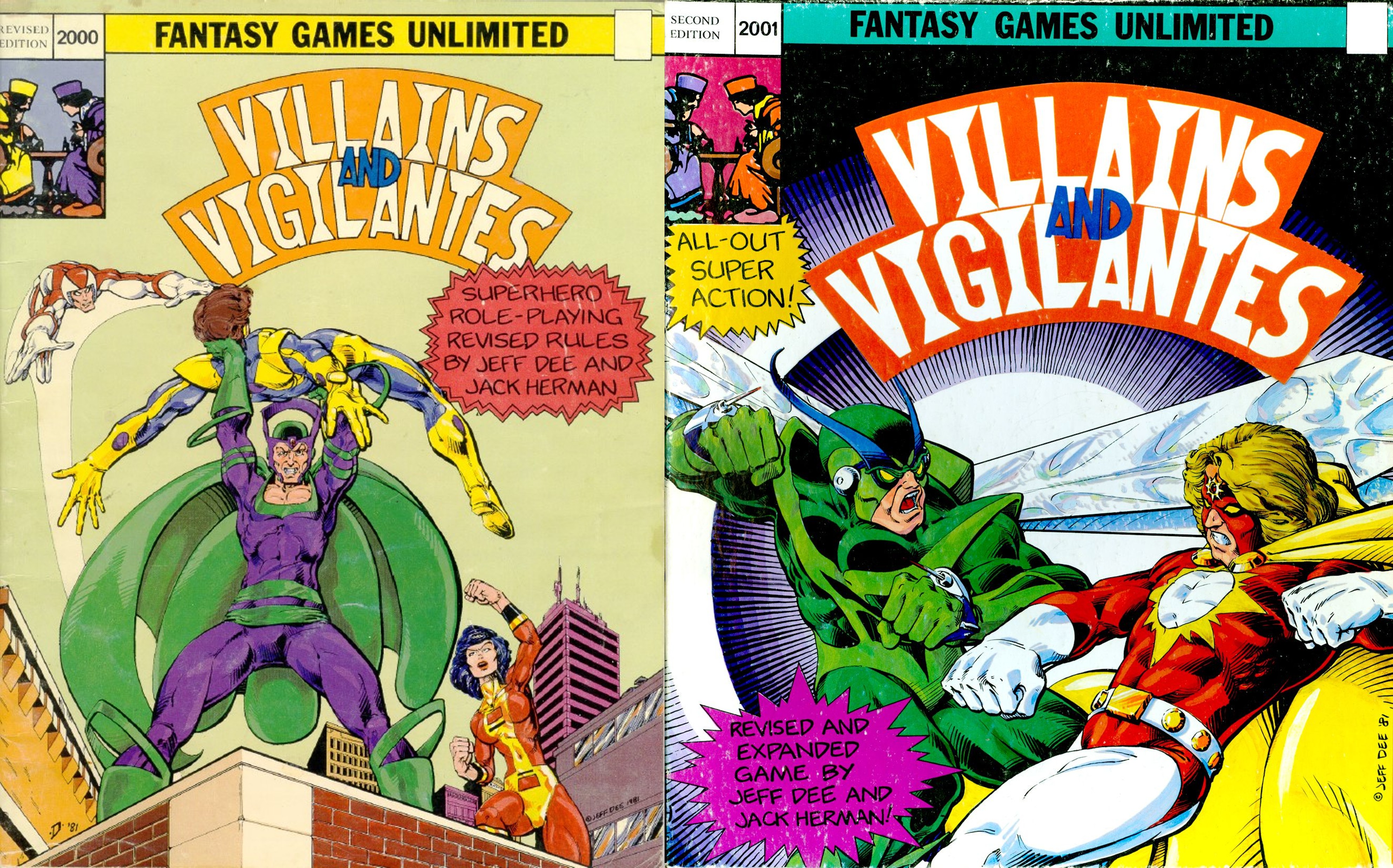
Later on, I discovered his art for Villains & Vigilantes, which completely solidified my love for his work. His aesthetic reinforced for me the connection between comic books and the fantasy genre, which I still think is a perfect fit.
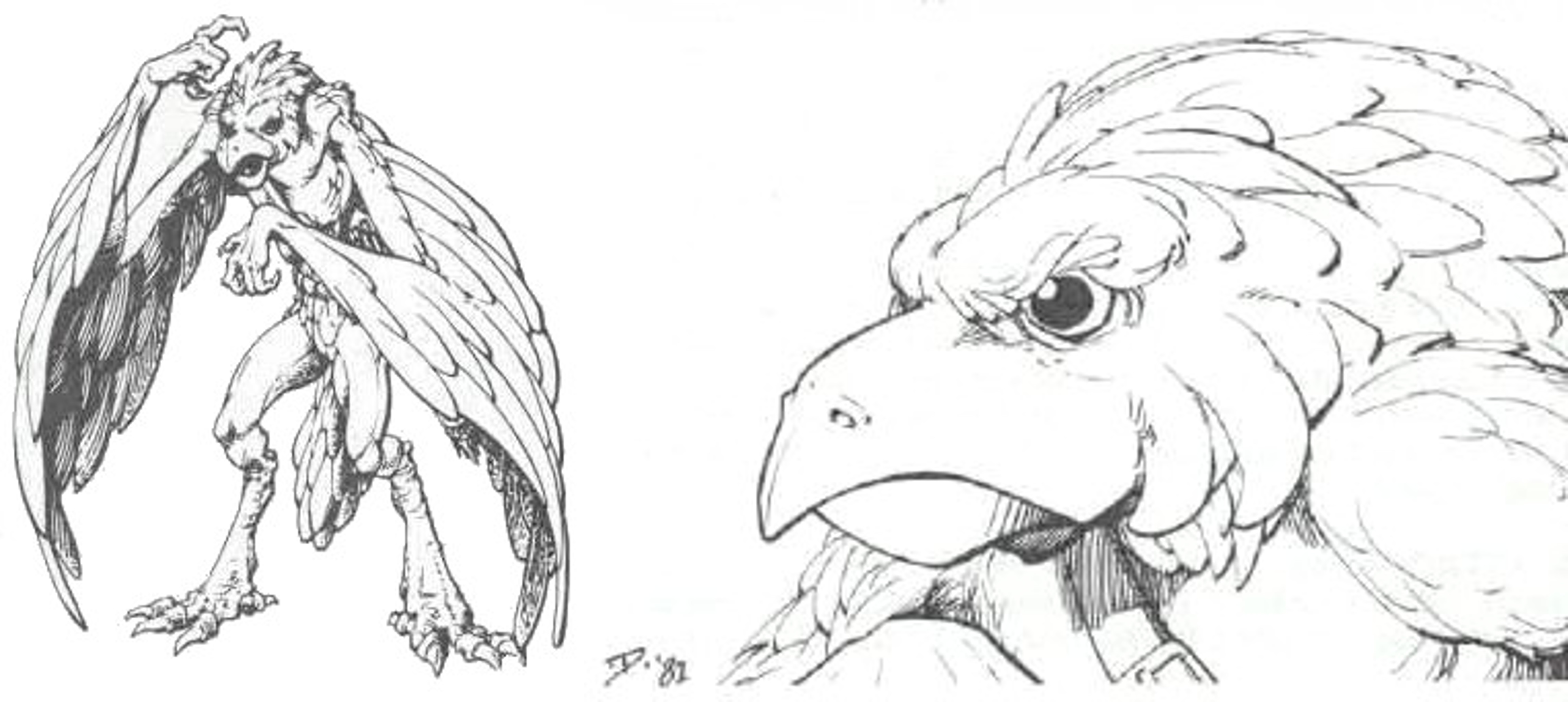
Jeff Dee didn’t draw any of the monsters in the original MM. But he did draw my absolute favorite monster in the Fiend Folio—which also happens to be my favorite non-traditional D&D ancestry, the Aarakocra! Their physiology in the game may have changed over the years (they now have separate arms and wings), but to me, Dee’s illustration is the true Aarakocra.
Erol Otus
Otus is my second favorite artist from this period. Just like Jeff Dee introduced me to Elric, Otus introduced me to Cthulhu via Deities & Demigods. While I wouldn’t discover H.P. Lovecraft’s actual writings or the Call of Cthulhu RPG until a year later, this book was my very first exposure to the Mythos.
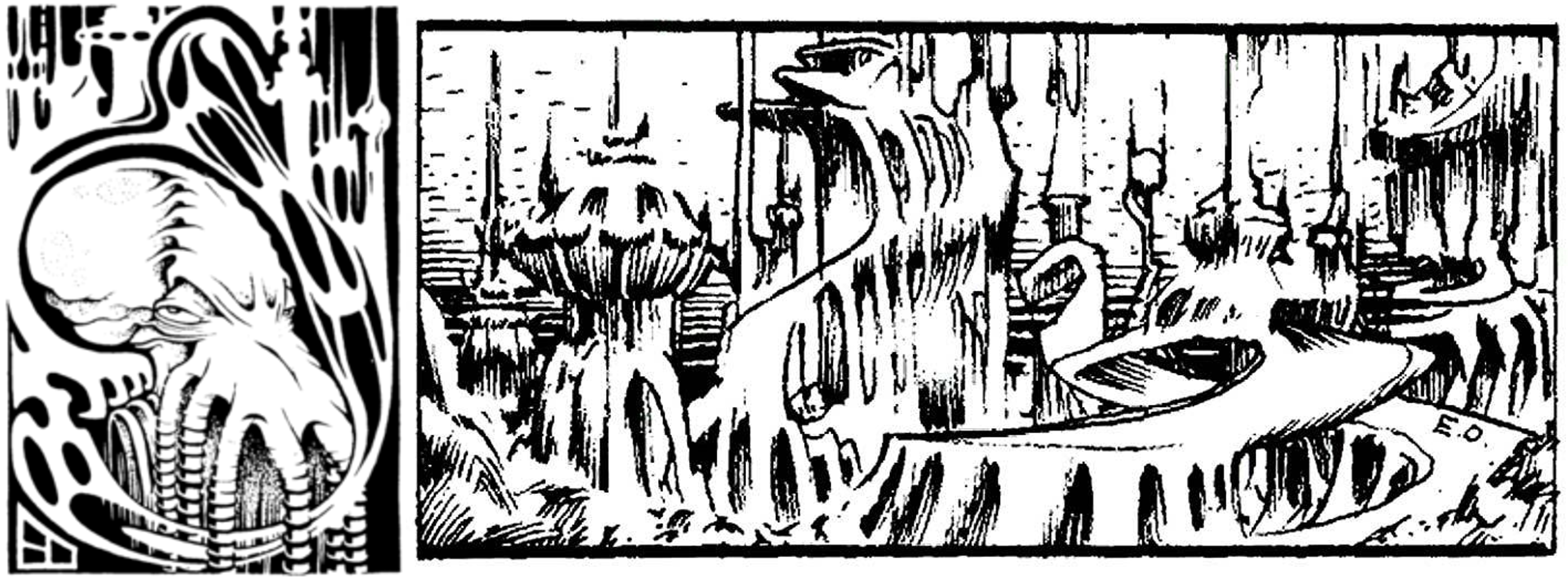
Erol Otus’ cover for that book absolutely beckoned me. While Sutherland’s MM cover was great for showing you the creatures inside, Otus’ Deities & Demigods cover illustrated the terrifying, cosmic connection between mortals and deities perfectly and efficiently.
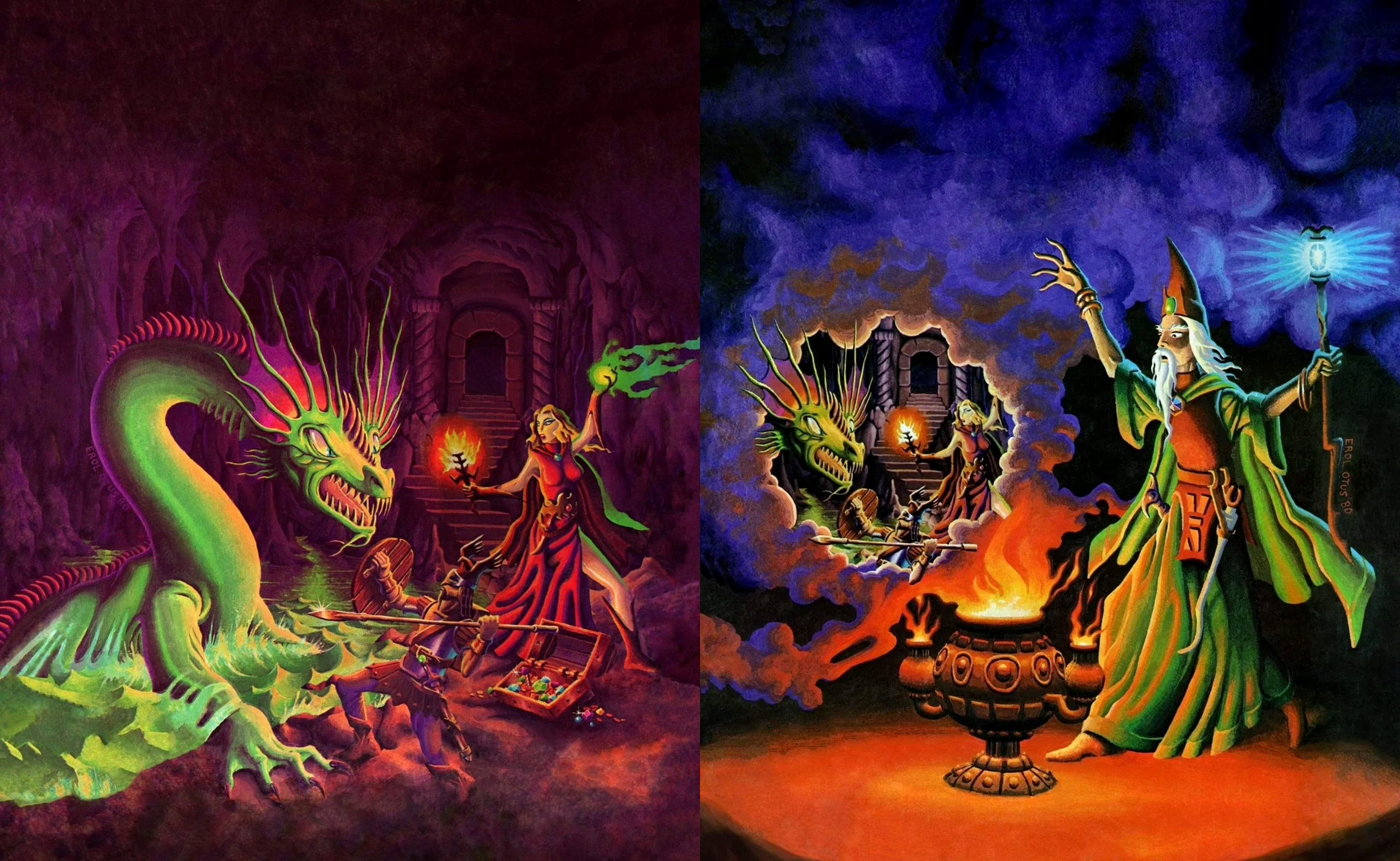
I would only discover and come to appreciate his iconic covers for the Basic and Expert sets much later in the late 90s, when I finally tracked down used copies. Perhaps because I discovered it so much later, his dragon on the Basic set isn’t my definitive mental image of a dragon—Elmore had already imprinted that concept onto me with his Red Box art.
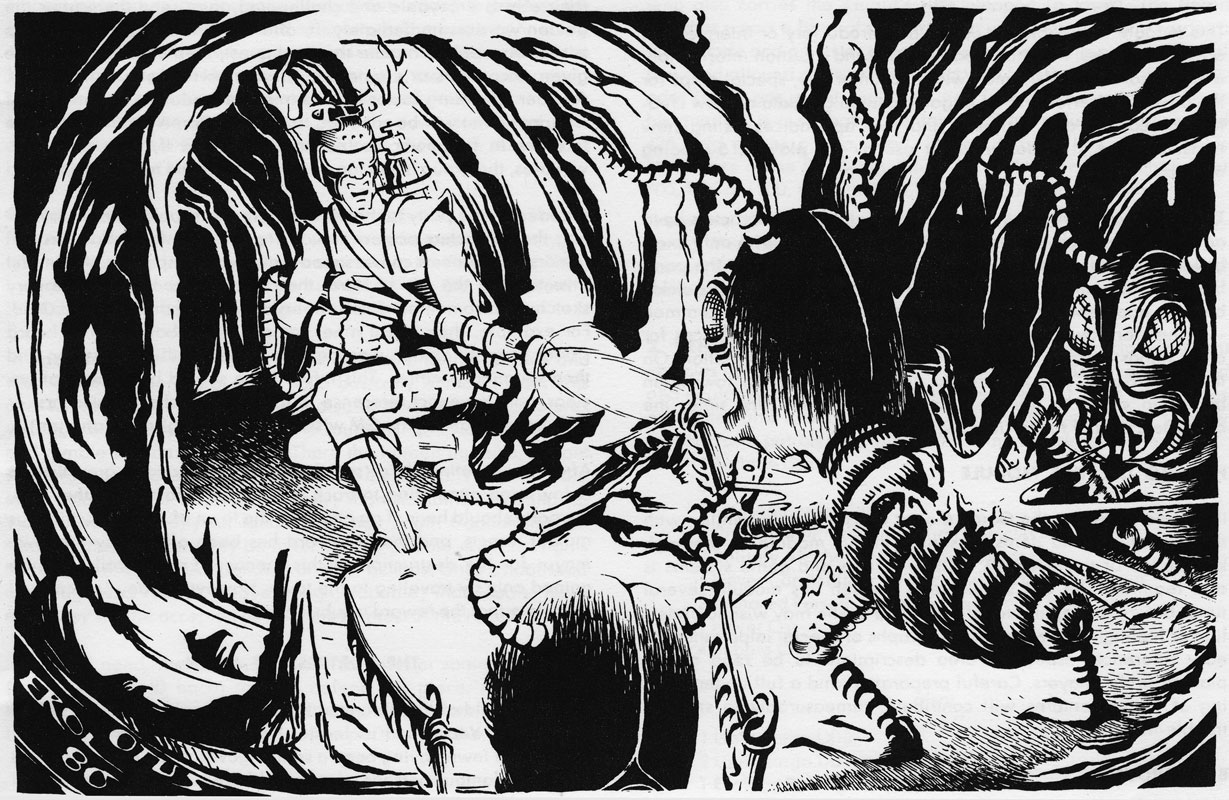
But when I began collecting old Gamma World supplements and adventures, I was thrilled to find his work scattered throughout that line as well.
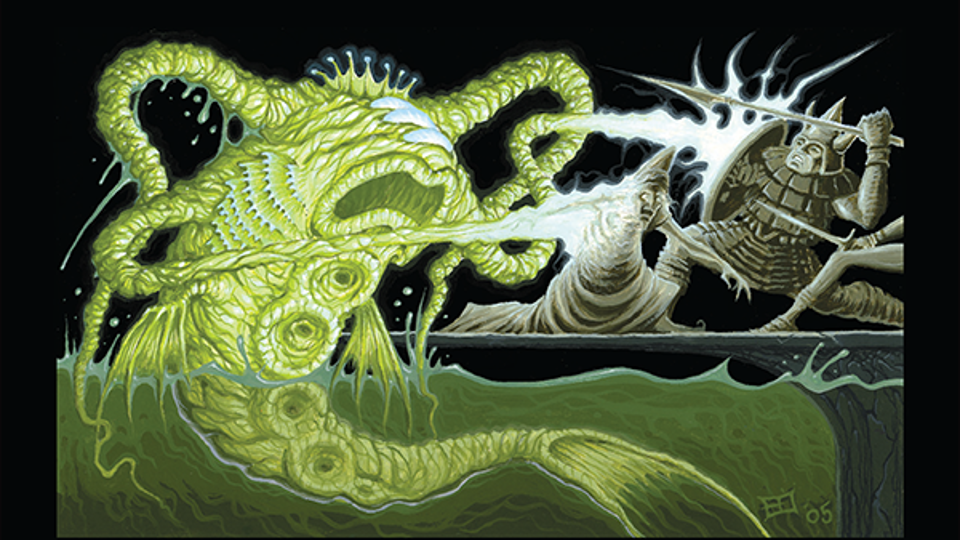
Erol Otus’ modern work is reminiscent of a psychedelic dream, and I mean that as the highest possible praise. His style is a perfect fit for the weird, gonzo feel of Goodman Games’ Dungeon Crawl Classics (DCC). He even drew one of my favorite interpretations of my favorite D&D Cthulhian monster—the Aboleth—for the cover of DCC Module #25: The Dread Crypt of Srihoz.
David C. Sutherland III
Sutherland wasn’t my favorite artist of the bunch, but his A Paladin in Hell is arguably a masterpiece of early RPG art. When I rolled up my very first character—a Paladin—that illustration was exactly how I imagined him!
His cover for the DMG is an undeniable classic. It’s incredibly evocative, and much like the MM cover, I can deeply appreciate the nostalgia it elicits and how it influenced later generations of gamers, even if it isn’t my personal favorite piece.
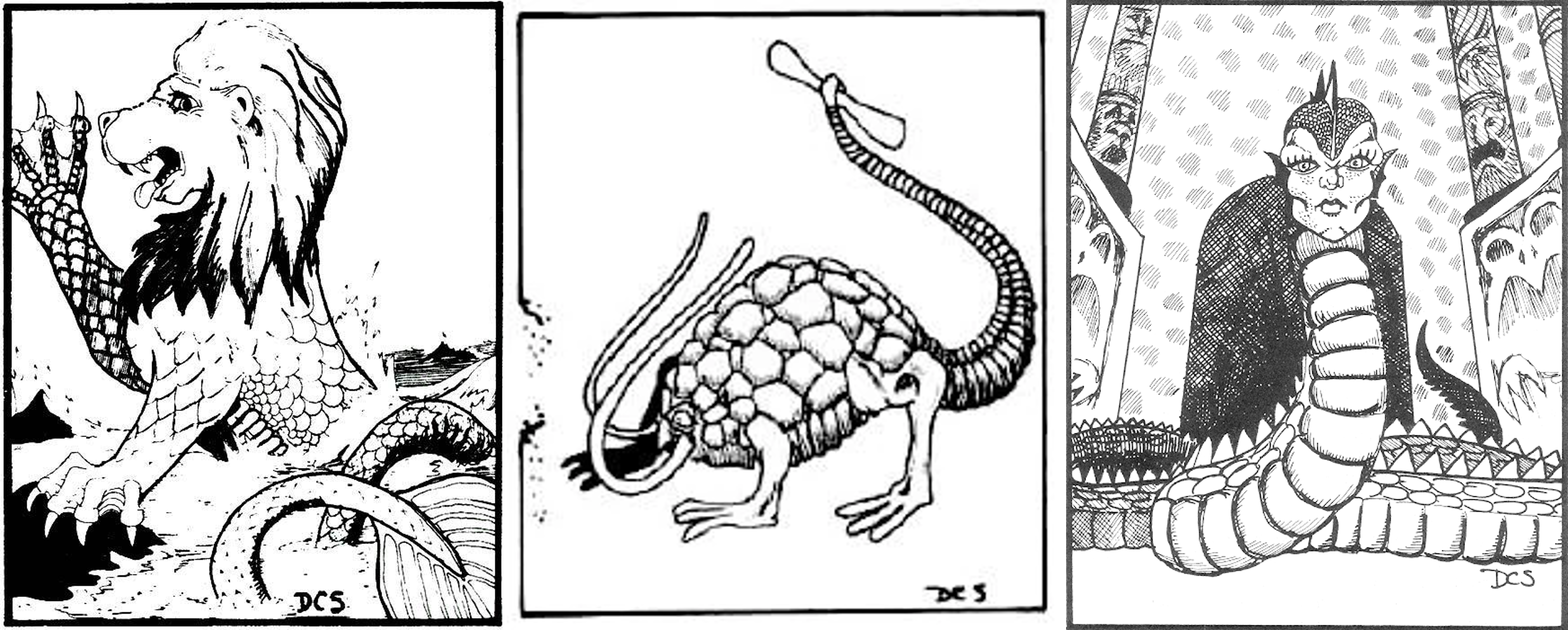
What I do love is his monster illustrations inside the Monster Manual. Some of them were quite simple, but they captured my imagination completely. I prefer his smaller, in-text illustrations to his full-page spreads. His Mind Flayer is so basic, yet incredibly charming. I love his Sea Lion and Rust Monster, but his Naga remains my absolute favorite in the book.
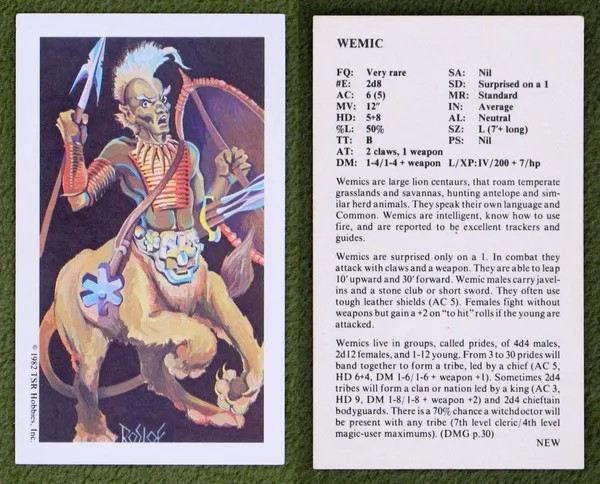
Fun fact: While researching this post, I discovered that Sutherland designed my favorite creature from the Monster Manual II—the Wemic—which was first published in Monster Cards Set 3 with art by Jim Roslof!
David A. Trampier (DAT)
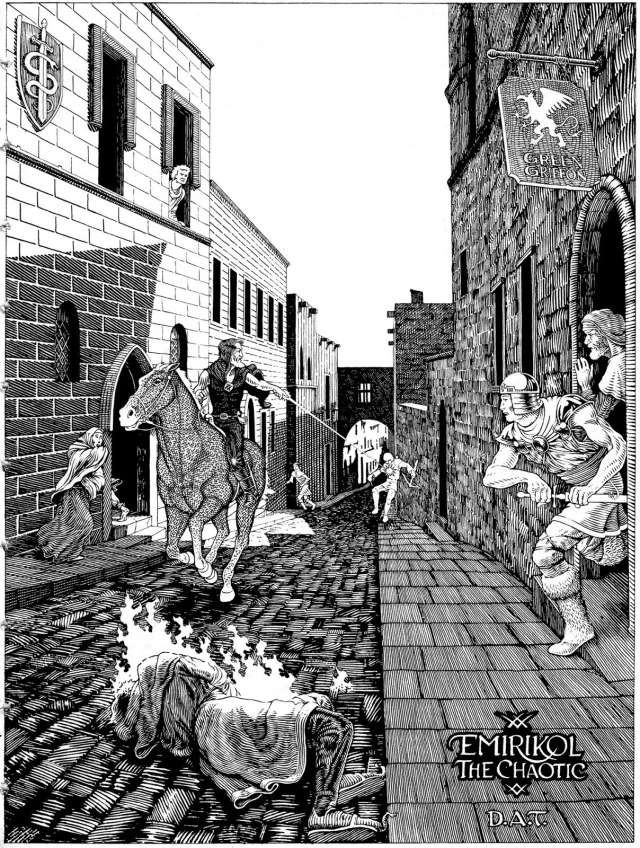
I was never really into Trampier’s Wormy comic strip; it just didn’t catch my fancy. I primarily knew his art from the AD&D 1e rulebooks. His illustration of Emirikol the Chaotic riding through the streets in the DMG is my favorite piece in that entire book. The sheer action and excitement of it invited you to imagine the story happening around the frame. I desperately wanted to play in a game that felt like that!
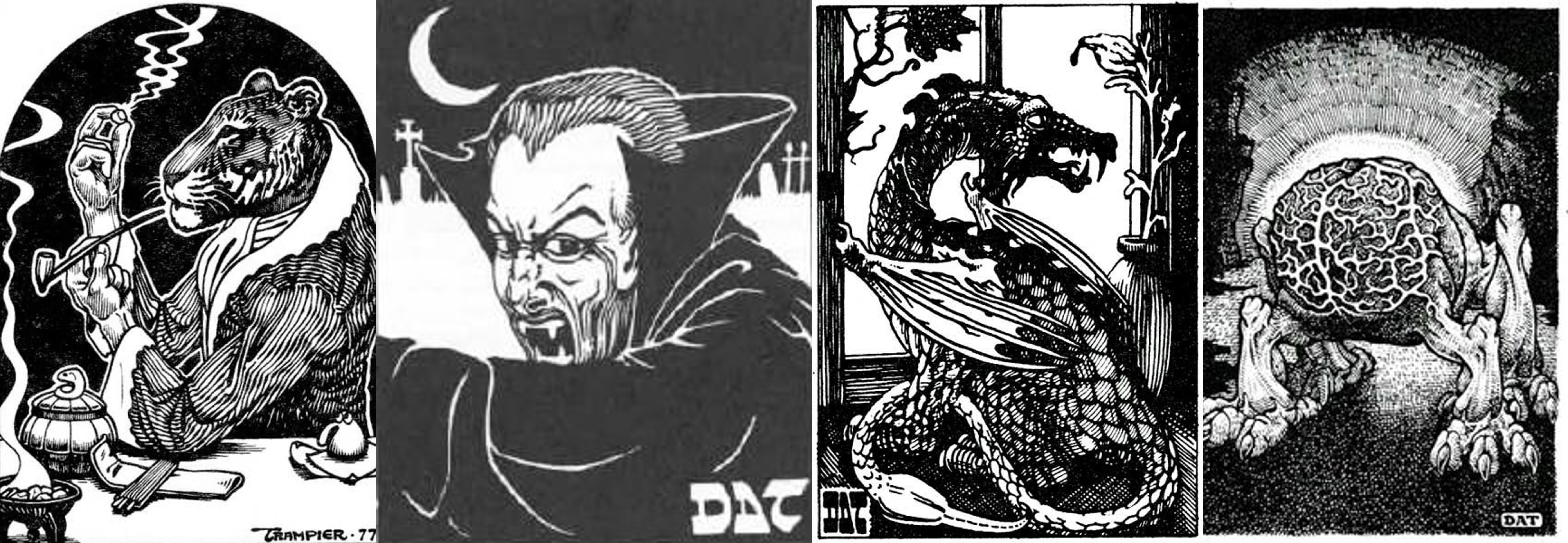
In the Monster Manual, his illustrations for the Rakshasa, Vampire, Pseudodragon, and Intellect Devourer immediately made me want to throw those monsters at my players.
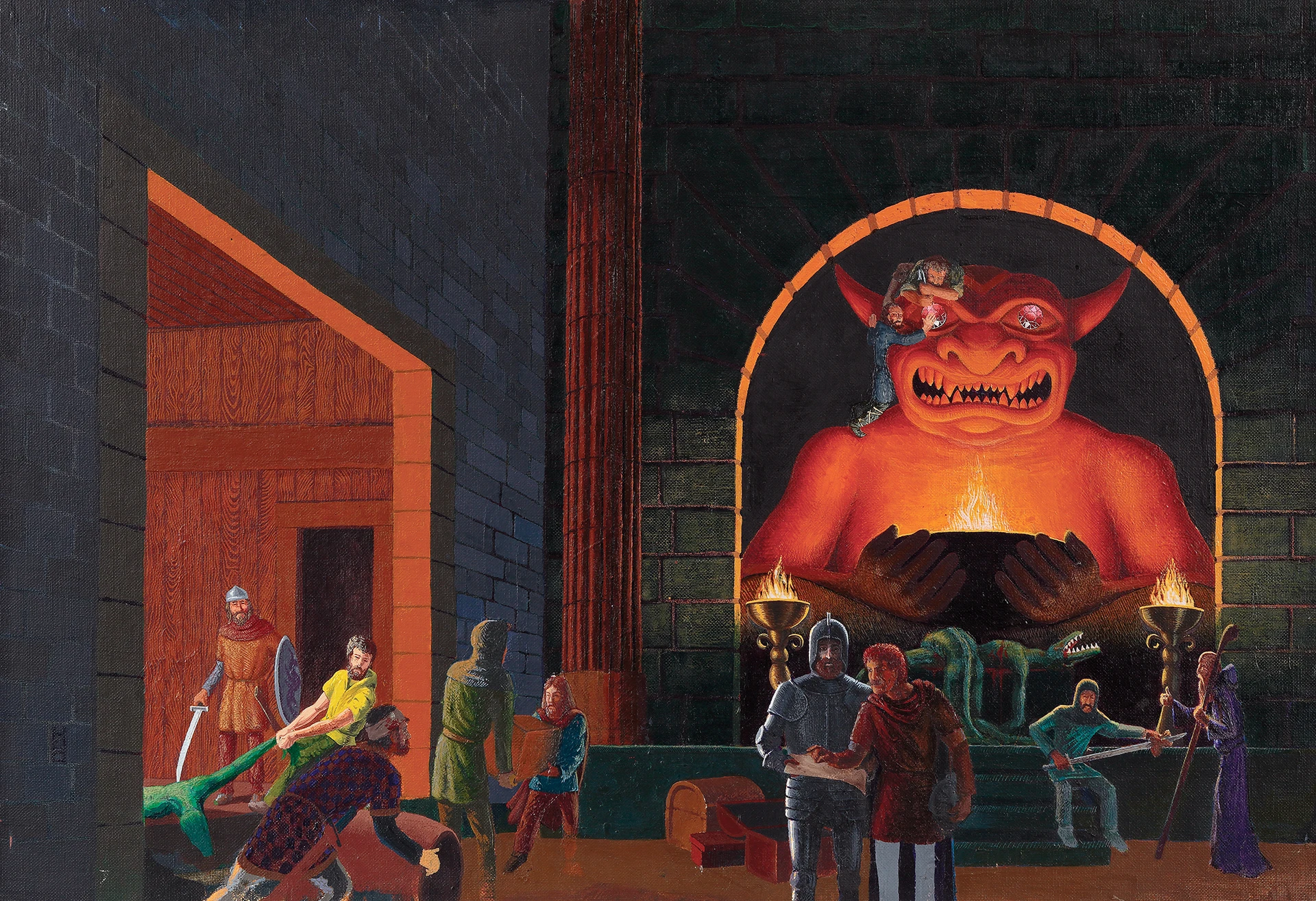
I finally got a second-hand copy of the PHB featuring his original cover around 1993, and of the three original AD&D core books, it is my favorite cover. It is the perfect classic murder-hobo scene; it captures the dark, dangerous feel of an old-school dungeon crawl.
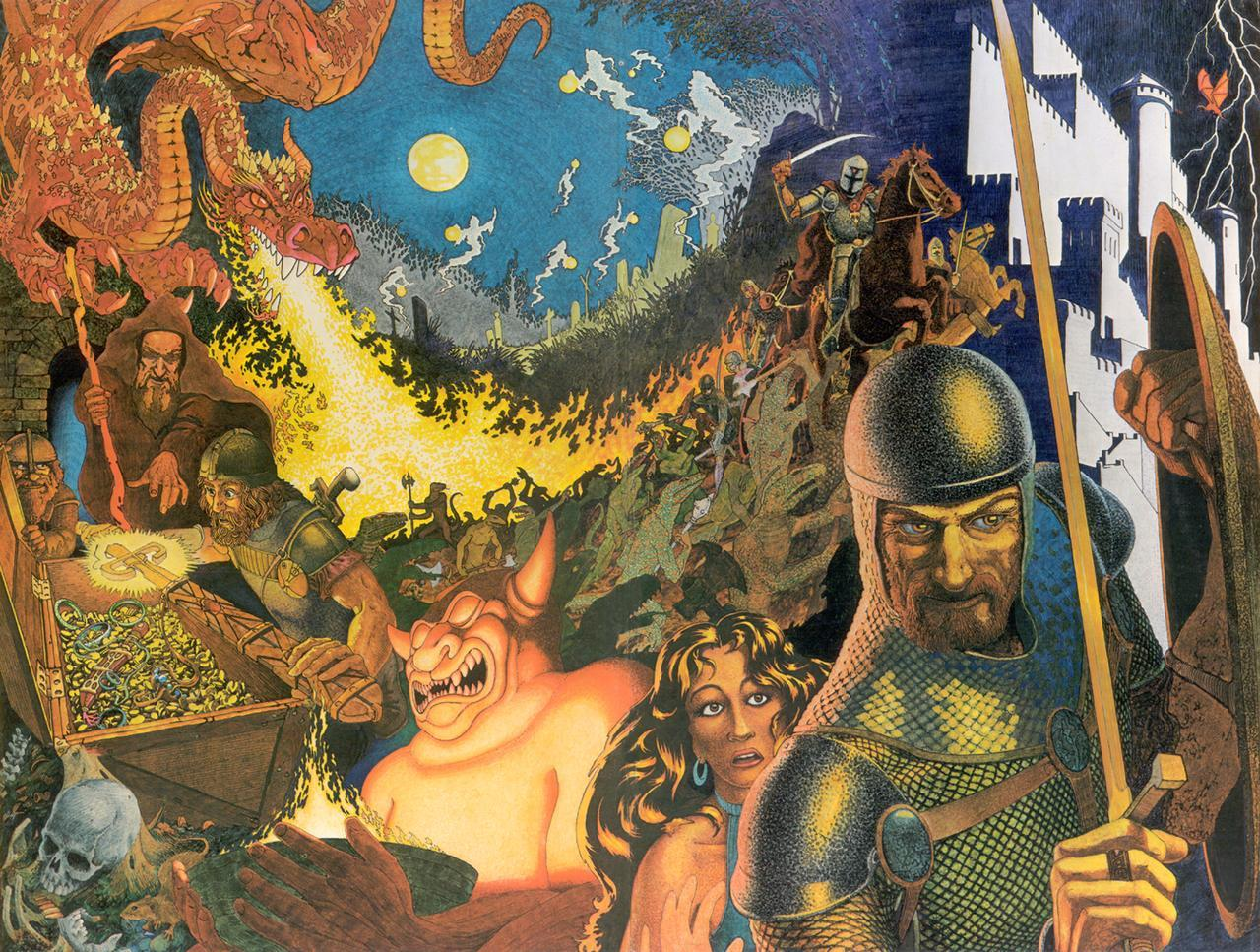
However, my second favorite piece of art by DAT is something I never actually owned: the panoramic art for the original AD&D 1e Dungeon Masters Screen. It is a masterpiece. You might argue it’s technically better than Emirikol, but the DMG art remains near and dear to my heart simply because of how deeply it inspired my games.
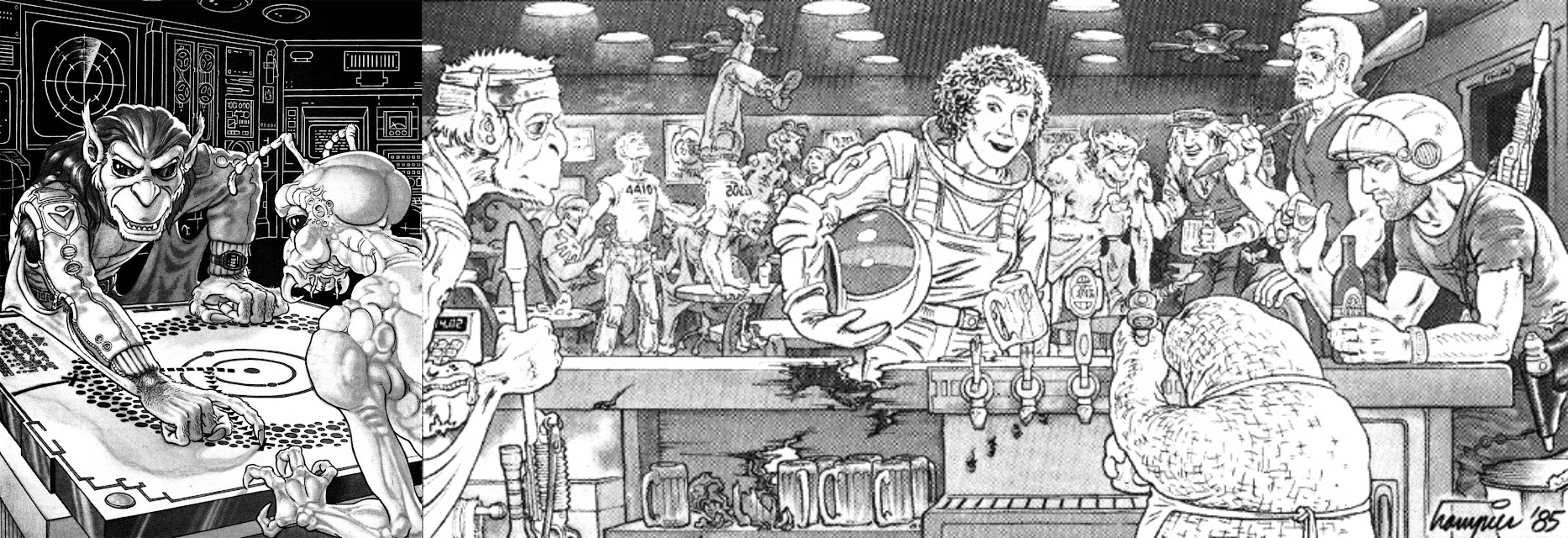
Another fun fact I learned while writing this: DAT also created illustrations for one of my favorite sci-fi games, Star Frontiers!
Jim Roslof
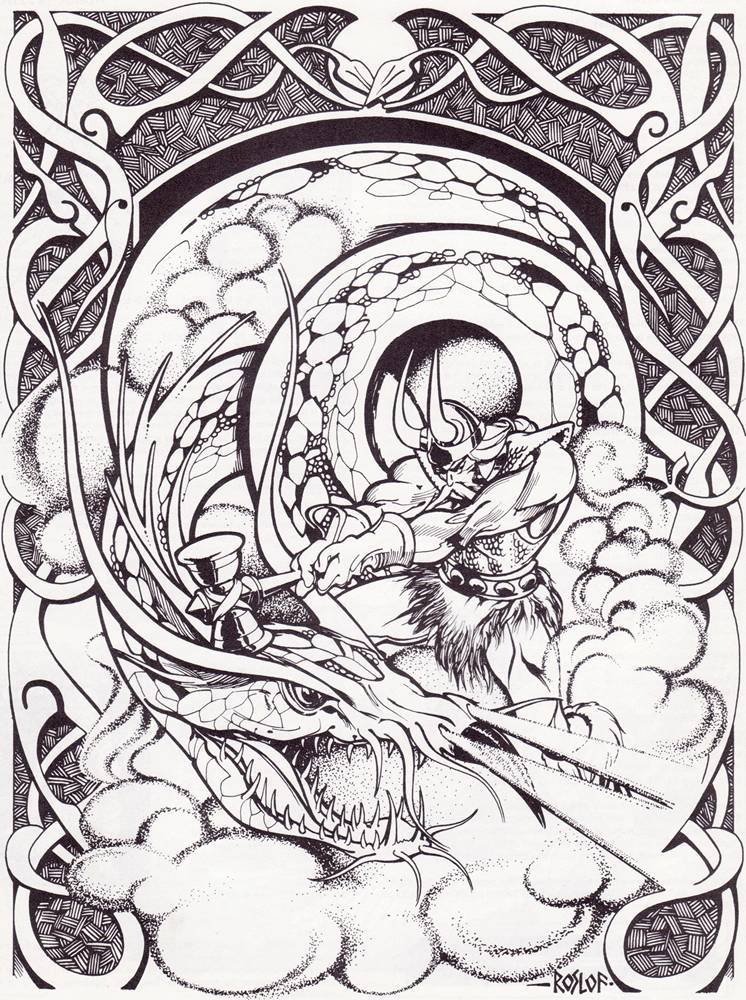
When I originally outlined this post, Roslof wasn’t on my list. But as I flipped through my old books for research, I saw his full-page illustration of Thor. I immediately realized just how important that specific piece of art was to sparking my lifelong interest in Norse mythology. It is a powerful, inspiring image and an absolute classic of D&D art.
It’s also worth noting that, as TSR’s Art Director, Roslof was pivotal in hiring the exact artists I wrote about in my previous post in this series (Elmore, Easley, etc.), so the inspiration really does come full circle!
I am still not done talking about the classic TSR artists! Keep an eye out for the next post in this series as we continue the 40-year retrospective.
