If you follow my Sunglar’s Musings Facebook page description, you might have noticed I mention reviews there. Well, it is time to deliver. I am writing this post here and a similar (Facebook-friendly) version there for the different audiences that read my content.
As I mentioned in my recent post chronicling the 100 games I’ve played in 40 years, I have played D&D in almost all its forms. I played the latest version, D&D 5th Edition, until 2017, but I haven’t run a campaign using that system since. I’ve played a pick-up game here or there, but my tastes have shifted.
Fantasy remains my absolute favorite genre of tabletop role-playing games, with sci-fi coming in a remarkably close second. I also still genuinely enjoy d20-based games. I know the limitations and the critiques surrounding the d20 system, but they are familiar, I speak the language, and I enjoy them.
So, if I’m not running 5e, what fantasy rules system would I use?
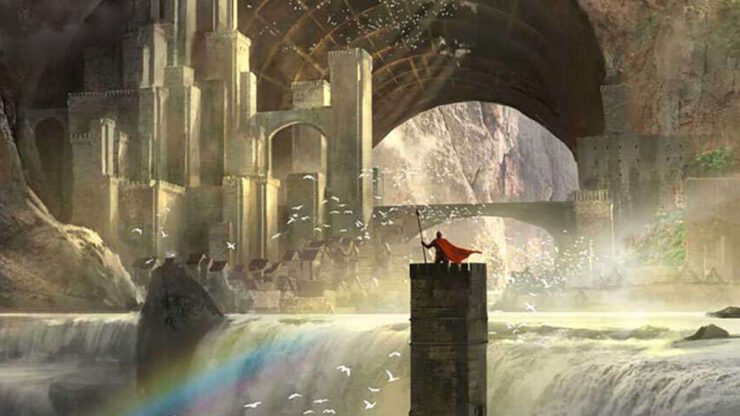
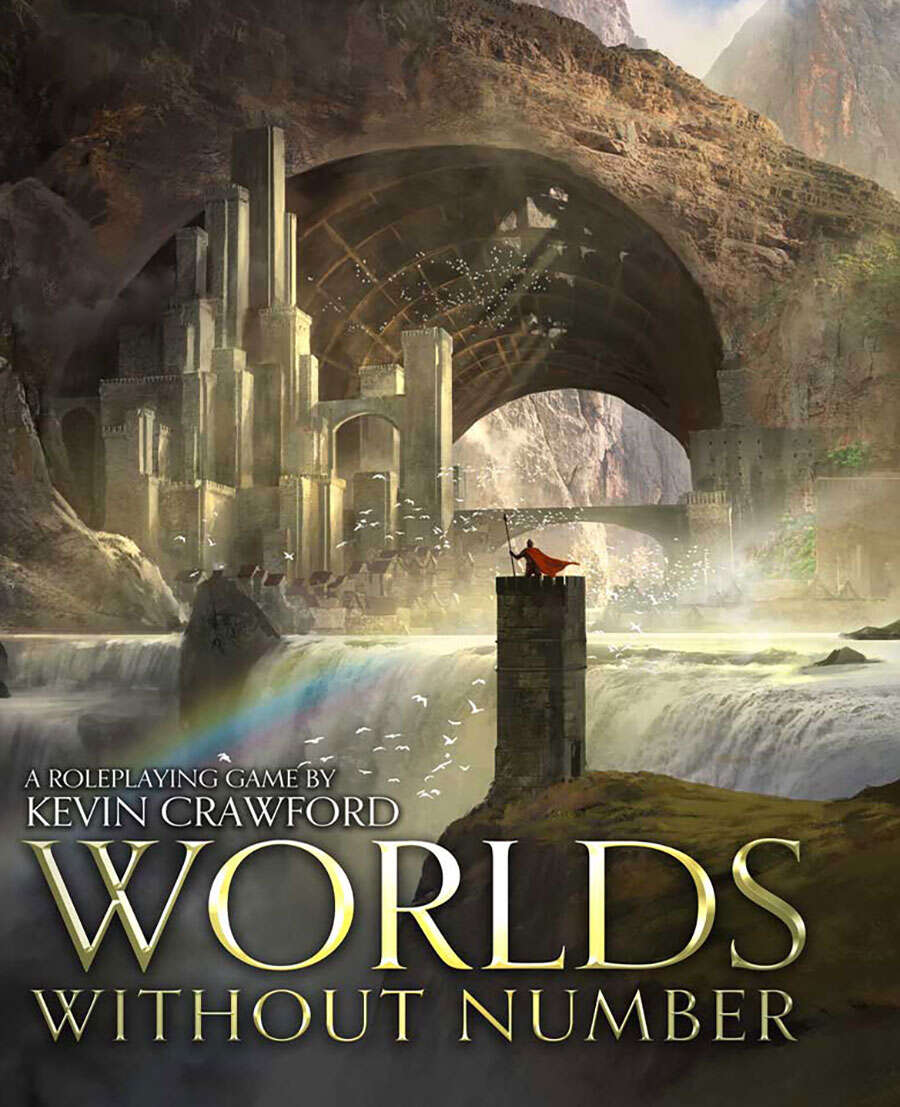
My current favorite iteration of the d20 fantasy game is Kevin Crawford’s Worlds Without Number.
The Master of the Sandbox
If you aren’t familiar with Kevin Crawford (Sine Nomine Publishing), let me elaborate. Crawford specializes in OSR (Old School Renaissance) distillations of classic D&D, but with a specific goal: facilitating sandbox-style play.
“Sandbox” is a term that gets thrown around a lot. I’m oversimplifying, but generally, it refers to open-world campaigns where players drive the action rather than following a linear “adventure path,” or storylines that give players massive agency where they go next.
Running a true sandbox can be intimidating for a Game Master. It feels like “homework.” This is where Crawford shines. His game line is built around making running sandbox-style games easier. He delivers handy tools, random tables, and faction systems that spark a GM’s imagination with minimum prep.
He has applied this philosophy to almost every major genre:
- Stars Without Number: His first game in the “Without Number” series, and an incredible sci-fi toolbox.
- Cities Without Number: A toolkit for cyberpunk games.
- Ashes Without Number: For post-apocalyptic settings (ranging from Walking Dead style grit to Gamma World mutant gonzo fun).
And then there is Worlds Without Number, my current favorite fantasy game.
Old School Bones, Modern Muscle
The game is written with a “Dying Earth” / Jack Vance-style default setting (The Latter Earth), which gives it a distinct flavor. However, the tools and system are generic enough that you can use the game for almost any fantasy campaign.
Beyond the tools for sandbox gaming, the book includes an exquisite, simple d20 system.
I’d describe the system as classic Basic/Expert (B/X) D&D with modern sensibilities. While the core math is familiar and straightforward, it offers players many customization options, specifically through a system of “Foci” (essentially Feats). This really makes characters stand out from each other mechanically, satisfying that itch for “builds” without the overwhelming crunch of 3rd Edition or Pathfinder.
The book also includes robust processes for dungeon exploration, faction play, heroic or high-level play, and domain rulership. These are modular—you can use them to enhance your campaign or ignore them entirely.
The most distinct mechanical shift is spellcasting. In Worlds Without Number, spells are potent, but you get far fewer of them per day. To me, that’s the most significant change in “feel” from standard D&D. (Though, if you prefer traditional OSR-style spellcasting, the author includes notes on how to adapt that, too.
The “Without Number” DNA
One of the strongest selling points for me is cross-compatibility. The Without Number series all share similar systems, and the rules are easily interchangeable.
The books include notes on converting between the different bits in different systems. So, technically, your fantasy games could be mashed up with sci-fi, cyberpunk, or post-apocalyptic rules. Even some of Crawford’s older games, like the Lovecraftian Silent Legions, can be used with these modern iterations with little work.
The Critique
The game is not perfect, and I want to be honest about that.
First, it has far fewer illustrations than a modern audience is used to. I would certainly like more art, but that is a matter of personal taste. Second, the layout. While the rules are straightforward to understand, the books are written in a dense, “wall-of-text” style. Some rule reorganization and a more “breathing” layout would make the game truly perfect.
But these are nitpicking. The book is truly an excellent TTRPG resource, written by a single person, which is a staggering achievement.
Try It for Free
You don’t have to take my word for it. The barrier to entry is non-existent.
The game is available for free in PDF format. And I don’t mean a “Quickstart” with levels 1-3. The free version is a massive, complete game. There are “Deluxe” versions with extra rules (which I own in PDF and print, and believe are worth every penny), but the free version is likely all you will ever need.
I REALLY like these books and wholeheartedly recommend them.
Stay tuned for Part 2, where I’ll discuss the other system vying for the top spot on my shelf.
Get the Books:
